
Glimpses of the Untold History of the Indian Freedom Struggle - Part 8
मराठी हिंदी ગુજરાતી বাংলা తెలుగు മലയാളം ಕನ್ನಡ தமிழ்
Raising his hand Sampatrao asked, “What was it that MangalPandey, an ordinary soldier managed to achieve? Had he made any preparations or was he driven by recklessness or pretentious zeal perhaps? What we have heard is more or less on these lines!”
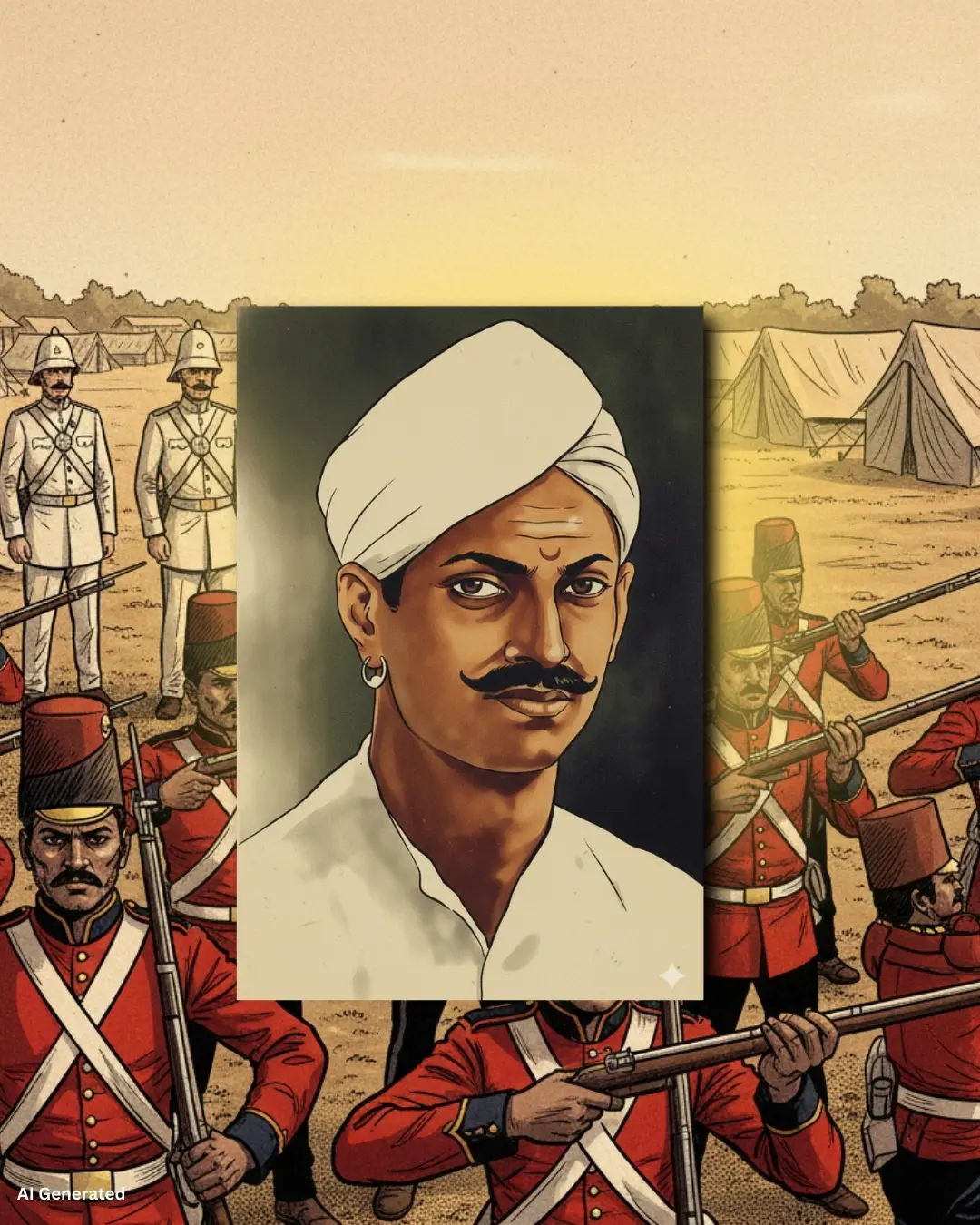
Malharrao’s reply was clear and vehement. “Making use of pro-British newspapers as also government servants, traders and informants who supported the British, the British spread the false story that ‘MangalPandey had consumed bhang (cannabis) and that he otherwise regularly consumed opium. It was in an intoxicated state that he behaved very irresponsibly. His act was in no way prompted by patriotic values or nationalistic sentiment for Bharat.
But that is a blatant and outrageous lie! School master Fadke’s father, AnantraoFadke was part of MangalPandey’s battalion and so was Fakirbaba’s maternal uncle. That is how we have sureshot information and that too from persons present on the scene.
Listen carefully. Yes, it is true that on 29th March 1857 MangalPandey took up arms and even launched an attack. But that was by no means an act executed in some inebriated state. Leave alone opium, ganja, cannabis and alcohol, he never even smoked a bidi; in fact he was not fond of the supari. Actually, it was around the last week of February that ‘those’ guns and ‘those’ cartridges arrived in his cantonment. But the truth was kept from the soldiers. They were deliberately kept in the dark.
MangalDiwakarPandey, a pious and virtuous young man, rose early every morning to chant the Gayatri Mantra 108 times and then worship Lord Mahadev. He had a fairly good command over the English language. It was in the company of Ishwariprasad, a jamadar in the army and very proficient in the English language that MangalPandey had learnt English. In 1775, the British hanged ‘Nandkumar’, the Indian Bengali tax collector of the Burdwan, Nadia and Hoogli regions.Now, burning with the desire to avenge the death of his grandfather and assuming the name ‘NavinchandraMukhopadhyay’, his grandson had joined the British military establishment. He too was very proficient in the English language. But he never revealed any of his secrets; he never allowed it. His son had become a close friend of MangalDiwakarPandey. MangalPandey often chatted with this friend and expressed his anger over the atrocities committed by the British fostering all along, a steadfast resolve that ‘something just had to be done’.Recognizing his grit, NavinchandraMukhopadhyaytrained him in English to a fair extent within a month’s time. Nobody had a clue about it – to the exception of course, of MangalPandey’s close and trusted friends.
Early one morning when MangalPandey went to the well to bathe before he could begin chanting the name of God, he overhearda part of a conversation between two British officers.The words cow fat and beef and the words pig fat and pork seemed to sound an alert and he decided to quietly listen into the entire conversation. It dawned on him that the British planned to deliberately offend religious beliefs of the Hindus and the Muslims both, as the Hindu never eats beef and the true Muslim would never eatpork.
That sent MangalPandey’s thoughts racing. Promptly at the crack of dawn, he broke the news to JamadarIshwariprasad and also to his colleagues. A careful and cautious plan began taking shape. Hindu soldiers, who were friends, were drawn into the plot. In fact, every single soldier of the Meerut cantonment was willing to go to any extent.(and to do whatever it took to safeguard their religious and nationalistic pride)
1st April 1857 onwards, the use of the new cartridges was to become obligatory and so the night of 28th March was chosen for the execution of the plan. Everybody was wide awake; they had not slept a wink. But Lieutenant Baugh, the British officer accompanied by a few of his British colleagueskept patrolling the entire Barack Pore cantonment. With him wereIndian landlords who did not belong to the region, some Thakursand also a few pilgrims who were on their way to Kashi. So MangalPandey decided to hold back and wait on. As the crowd accompanying Lt. Baugh gradually dispersed, MangalPandey stepped out of his tent armed with an old, loaded gun and a generous amount of ammunition to launch an attack on Lt. Baugh’s quarters.
As a signal to the colleagues who were part of the plot, a piece of red cloth was temporarily put up. A chicken-hearted, cowardly colleague promptly hid it and so MangalPandey was the only one, who ended up at the residence of Lt. Baugh. The Lt. stepped out and MangalPandey fired at him. That was it, the first bullet, the first shot of the war of independence!
But the traitors had already done their job. The Lt. was prepared. Immediately planting himself astride the horse he began to flee. But two of MangalPandey’s bullets drilled into the horse’s body and the horse crashed to the ground taking Lt. Baugh with it. Brandishing his sword,MangalPandeycharged at Baugh and struck him seven times. But ‘Sheikh Paltu’ the Lieutenant’s personal orderly lunged forward to pull MangalPandey back and shoved him down to the ground.
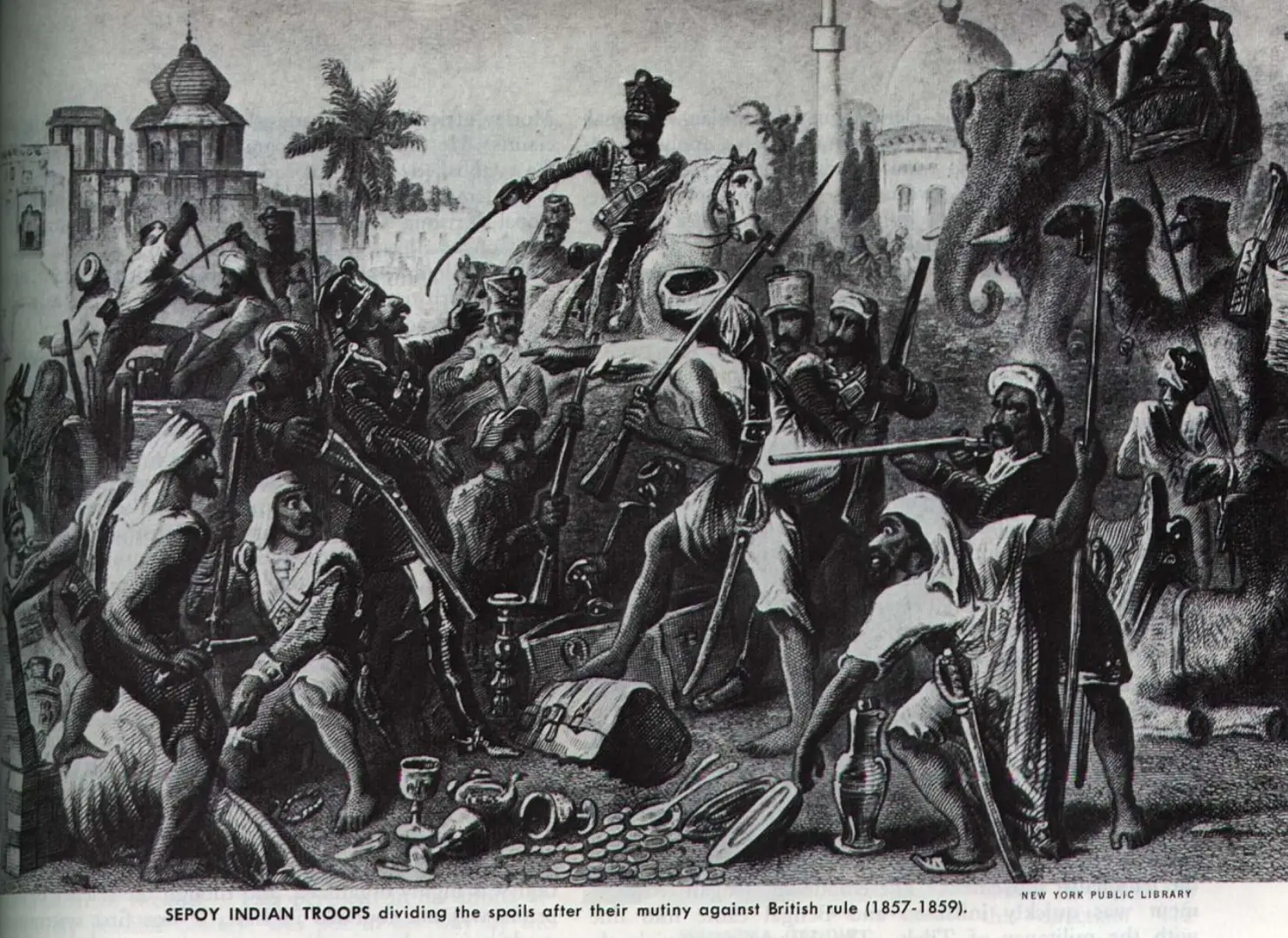
Hewson, the British Sergeant-Major, who had got wind of MangalPandey’s secret plot, arrived on the scene. Reading defeat in the situation, he ordered JamadarIshwariprasad to attack MangalPandey. Defiant by now, Ishwariprasaddecided to disregard the order and began helping MangalPandey instead. However,ShaikhPaltu rushed to Hewson’s help and urged other soldiers to help him.MangalPandey’s loyal colleagues began raining stones and chappals on them.
MangalPandey and his colleagues had almost won this battle. MangalPandey kept proclaiming loudly,
1) Kill the foreigner (the British)
2) You have tasted a black man’s loyalty. Nowtaste his fury!
3) By biting these cartridges we shallbecome infidels, awake!
4) I am a true Indian and I am Hindustan myself!
Just then major general John Bennet Hearsay reached the scene. He was accompanied by a large reinforcement. He threatened to shoot every Bharatiya soldier who defied orders. The soldiers accompanying him had no idea of what had transpired until then and so advanced with any weapon they could lay their hands on, escalating to a skirmish resulting in a bloodbath.
But it was by no means an ordinary scuffle. It was the very first battle for independence. On one side were 600 soldiers who had remained faithful to the British and on the other, were MangalPandey and his supporters who numbered a mere twenty-four. This fight drew to a close as evening fell. Following MangalPandey’s instructions, Ishwariparasad helped the twenty-four colleagues to escape into the forest.
Finally at five in the evening, MangalPandey and Ishwariprasad were held captive. Drenched in blood, MangalPandey walked erect. He kept shouting slogans loudly. He was admitted to the military hospital just to throw dust in the people’s eyes. A sham of a seven-day court martial followed. Then, on 8th April 1857, MangalPandey was hanged in full view of thousands of people. Ishwariprasad met the same fate on 21st April.
Friends! These were the first two sacrifices of the fight for the independence of our Bharat. The saga of the battle for independence just cannot begin without expressing reverence to the names of these heroes”
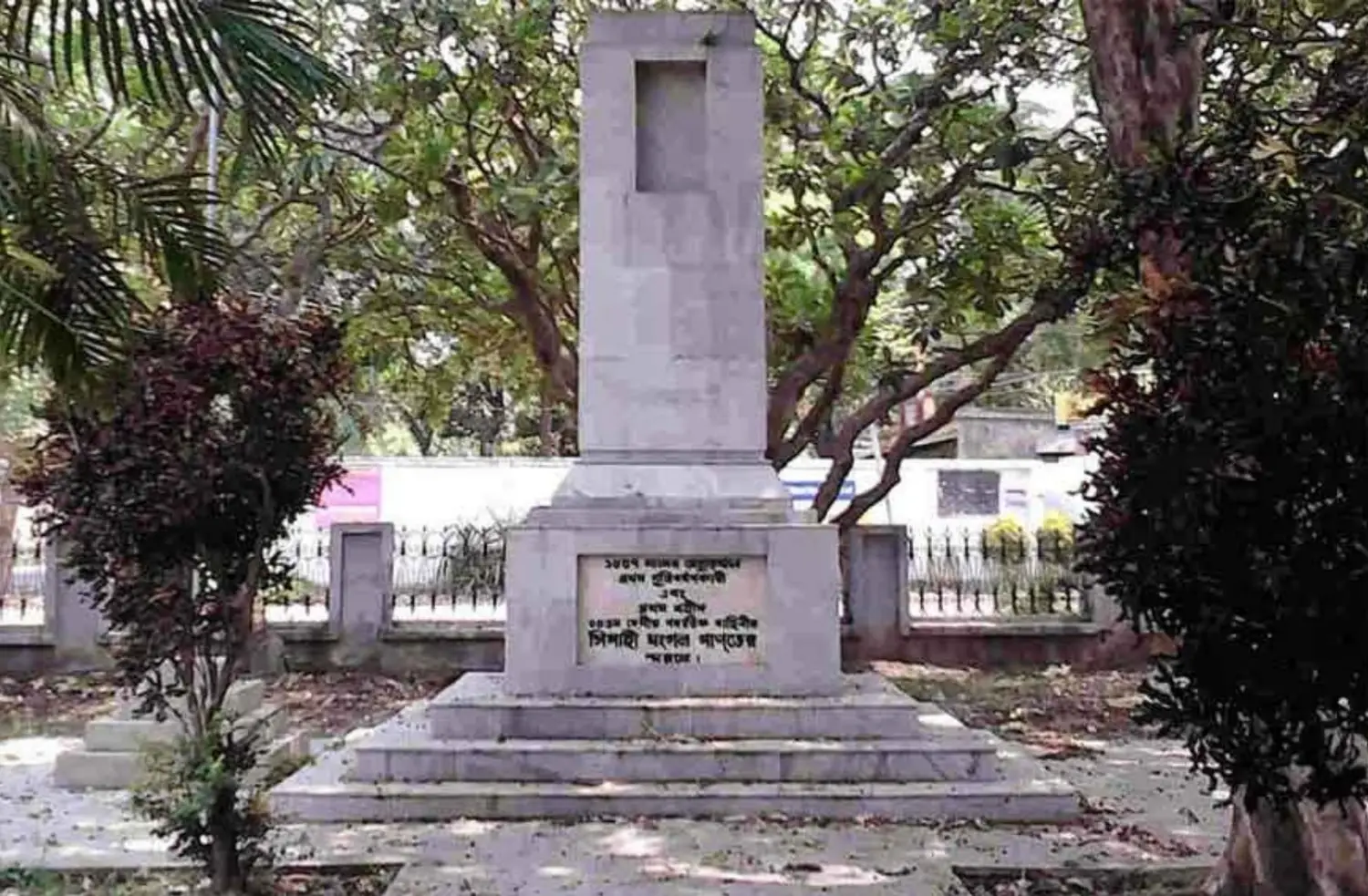
The memorial of the martyr MangalPandey
….to be continued