
Glimpses of the Untold History of the Indian Freedom Struggle - Part 6
मराठी हिंदी ગુજરાતી বাংলা తెలుగు മലയാളം ಕನ್ನಡ தமிழ்
At daybreak, the senior police officials of the district arrived in the village. The local police officers had informed Malharrao and the village Patil (the headman) beforehand to that effect. The only reason the village Patil meaning Dhanaji Patil held his position was that it had been handed down as ancestral legacy and by virtue of the fact that he was the elder son. He never discharged any duties that came with the position. It was Malharrao who was responsible for all government and non-government obligations. Besides, Dhanaji Patil was not just worthless and good-for-nothing, he was also lecherous and known to indulge habitually in all kinds of depravity. The entire village however, trusted Malharrao completely. It was thanks to Malharrao’s assurance to the villagers that since the last four or five years Dhanaji Patil had been enjoying every single day of his life. Malharrao very diligently handed over to Dhanaji Patil, his share in the village tax collection. More importantly, it was Malharrao, who managed Dhanaji’s land spread over thousands of acres in and around the village. It was only when the British officers were on a visit to the village that Dhanaji would be present at the Chavdi (a central place in the village from where administrative or legal affairs were conducted). But in any case it was Malharrao, who did the talking.
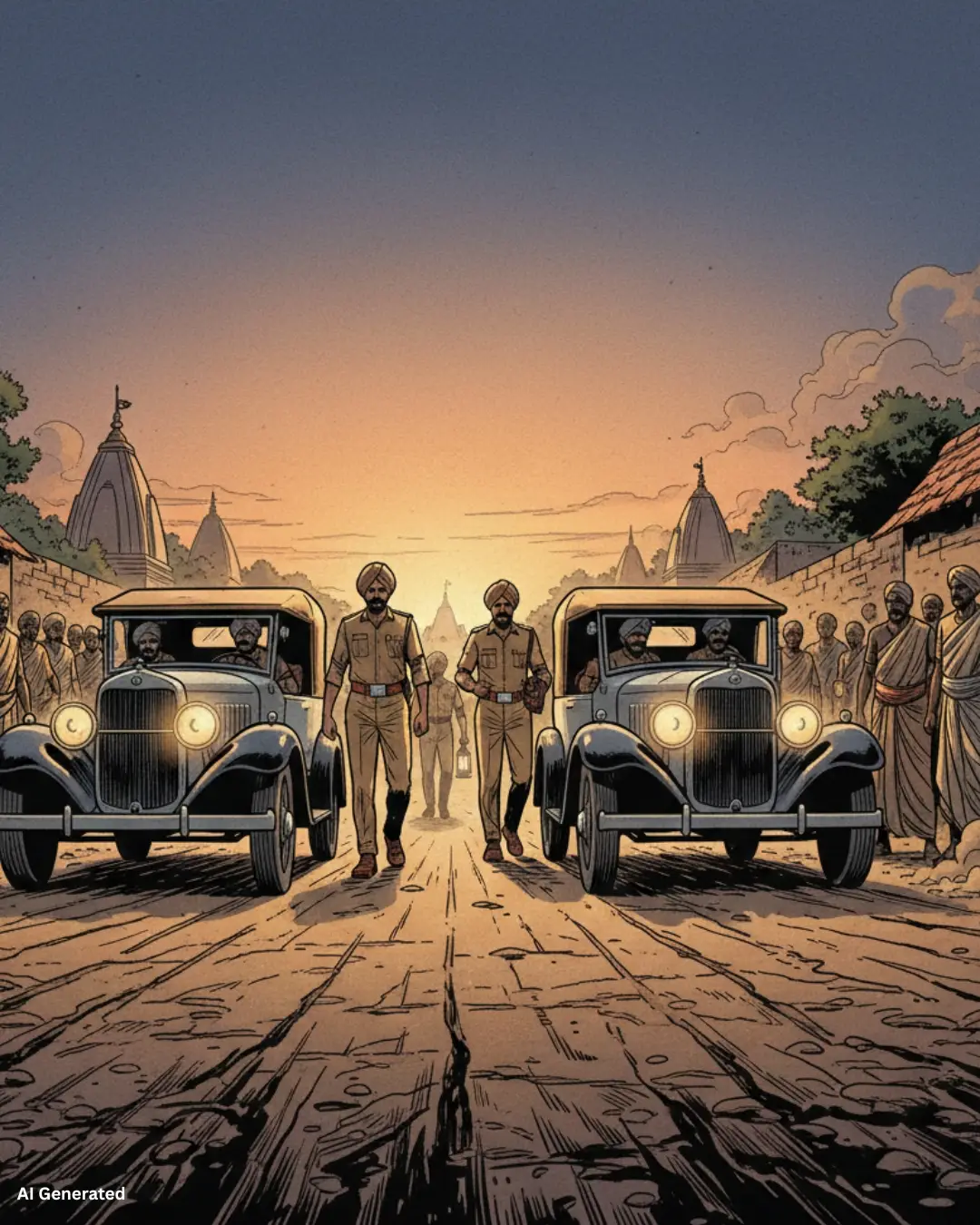
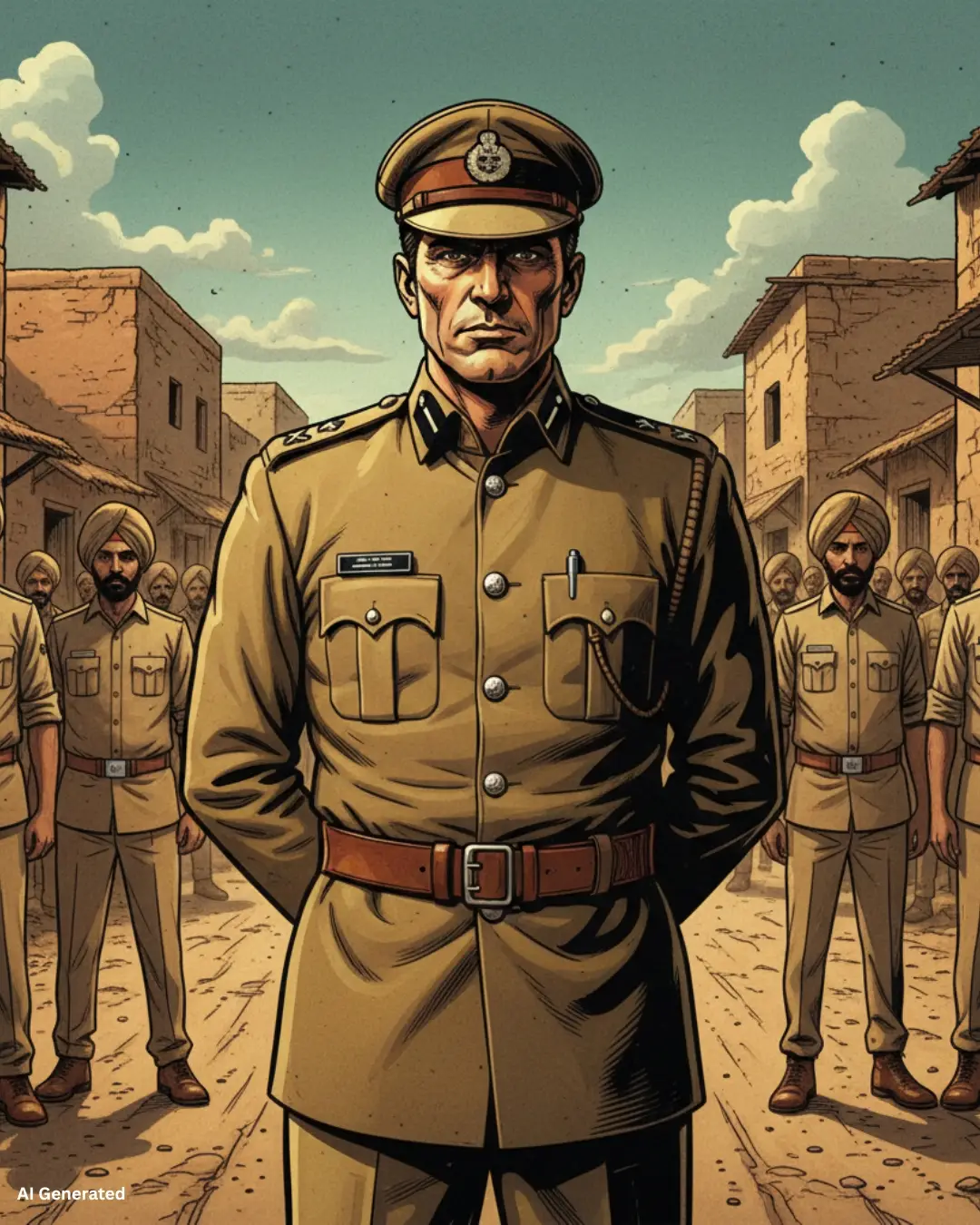
British officers were expected today too and so Dhanaji Patil was at the Chavdi. Malharrao had already narrated to him the previous day’s events in brief. Since the matter involved the murder of a police officer and his informer brother, Malharrao was very sure that the news would reach the top brass and that too in the dead of night and so atleast one British officer was bound to arrive from the city. And so he did, exactly as expected. Mr. Heldon, the British officer reached the village at seven in the morning. Heldon held the top most rank in the police department at the district level. He had an excellent command over the Marathi language.
Infamous for his brutal and merciless treatment of patriots, Heldon was for them, a ruthless tyrant. Like in prisons of Mumbai and Pune, freedom fighters and revolutionaries were kept in prisons under his charge. Those who had served a jail term under him described it as ‘hell on earth’.
Heldon began interrogations right away on arrival. He had a sharp ear and Malharrao, with the help of Fakirbaba and the school master Phadke, had arranged to raise the volume of the ‘gajar’ and of the cymbals in the Vitthal Mandir to twice as loud as it otherwise was. Piqued by the noise Heldon headed straight in that direction to find out what was going on. Following close behind him were Malharrao and Dhanaji Patil along with four of Heldon’s close and trusted Bharatiya police officers.
As they walked ahead, Malharrao gave Heldon a meticulous account of the murder and the spot where it had occurred. This was only going to strengthen Heldon’s suspicion, Malharrao was very certain.
Besides, Malharrao was also sure that this British officer was not going to force his way into the temple but the four police officers of Bharatiya origin – his faithful dogs – were definitely going to comb through the entire area.
These four police officers were very notorious in the region. The police officer who was murdered in the village was also Heldon’s faithful dog, the fifth one. So, the other four were absolutely enraged.
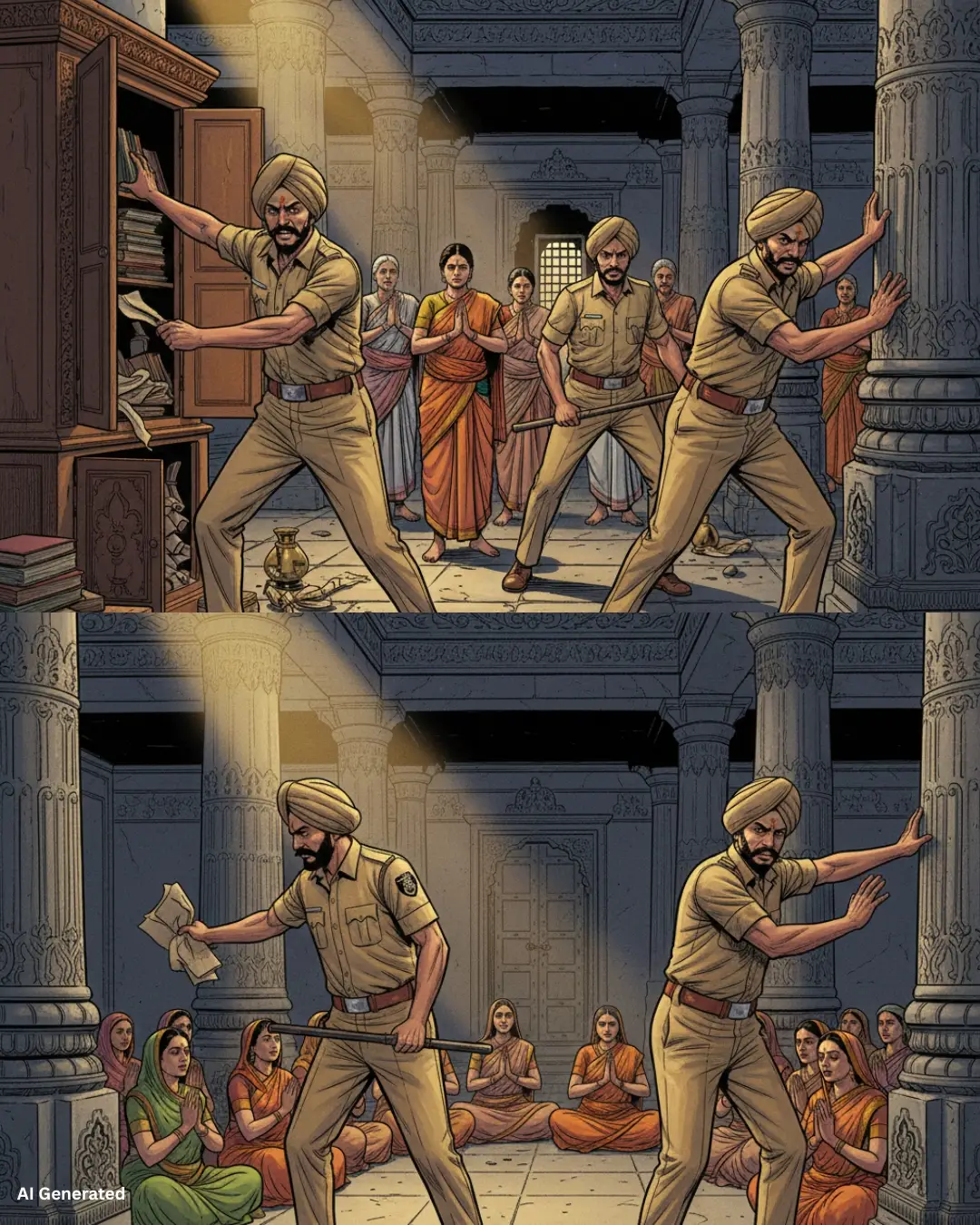
On arriving in the premises of the temple, Heldon sat outside in the yard and obeying his orders, these four officers began scrutinizing the temple and the assembly hall. But then they were required to follow certain rules, viz. rules regarding non-violation of the sanctity of the temple. However, realizing that abiding by the rules was not getting them anywhere, these four officers chose to disregard those rules and forced their way into certain areas to examine every corner and every cupboard.
At any rate, it would have been impossible for them to find the secret doorways, secret chambers or even the basement for two reasons: Firstly Fakirbaba i.e. Shivaramrajan had designed the structure in a way that served very well, the purpose of secrecy and the Tamil workers, who were part of the construction team of both the temples had long since returned to their respective villages. Secondly the arrangement was such that the women folk sang bhajans and were made to sit in places that concealed secret passages and doors. Many of these women happened to either be relatives of the four police officers or to belong to their village or to their caste and so pushing their way through the crowd of these women meant running the risk of being boycotted by the others of the caste or by the villagers.
The four officers stepped out and whispered to Heldon in English, “All seems alright except on three scores. Something is amiss there. 1) It is customary for women to sit in a group on one side and the men, in another group on the other but in this temple the women folk, though seated separately from the men, seem to be scattered all through the assembly hall. 2) There is a newly erected ‘mandap’ in the yard outside the temple hall. There is a purification ritual performed on a large scale involving the sacred fire on the very spot where the murder took place. The pit for the sacred fire is very large and here again there is a fairly big crowd.
More importantly, out of the eighteen ‘pagad’ castes (eighteen prominent castes of the times. As per the custom prevalent at the time, each distinguished itself from the others by the ‘pagdi/pagote/feta’ meaning turban worn which was essentially a typical and unique feature of every caste). Prominent personalities of every caste are seen arriving even from villages in the vicinity and upsetting them all could mean triggering discontentment among the people. Also, not a single caste has been kept away from the ‘mandap’, which again sparks doubt. Even people belonging to castes, living outside the village limits have been allotted place inside the ‘mandap’. Why would these people enjoy so much respect?
How come the members of the upper caste, i.e. the Brahmins, the Kshatriya and the traders (businessmen) are not opposed to this arrangement? This very clearly points to a plot brewing here.
3) Many of the faces here, seem unknown. They do not seem familiar and from around the vicinity.
Should we take all these suspicious characters and all the heads of castes to the police station for interrogation? Four or five lashes of the whip and someone or the other will surely blurt out their secret.”
Hiding his unease, Heldon replied in English, “We have strict orders from the top forbidding any such action because the educated class across the country opposed to the government has already informed all the Bharatiya (Indians) or at least the heads of castes and village heads in detail about the ‘Queen’s proclamation’. So I might have to seek permission of the higher-ups. Following the ‘Jallianwala Bagh’ incident, the British Parliamenthas been exercising restraint on certain fronts and we have orders to do the same. To add to it, newspapers the world over have published reports and photographs of Bharatiyas (Indians) who sustained serious head injuries during the Dandi march of 1928. So just let us handle this with caution and patience.”
Along with his squad, Heldon left for the District headquarters. None of those present had even the faintest idea that Malharrao, Fakirbaba and the school master Phadke were very proficient in the English language and not only understood but also spoke it fluently. They had however, ensured that Jankibai stood a little away from them and that too out of respect as Heldon was well aware of the clout her husband, Ramchandra Dharpurkar wielded in the British government.
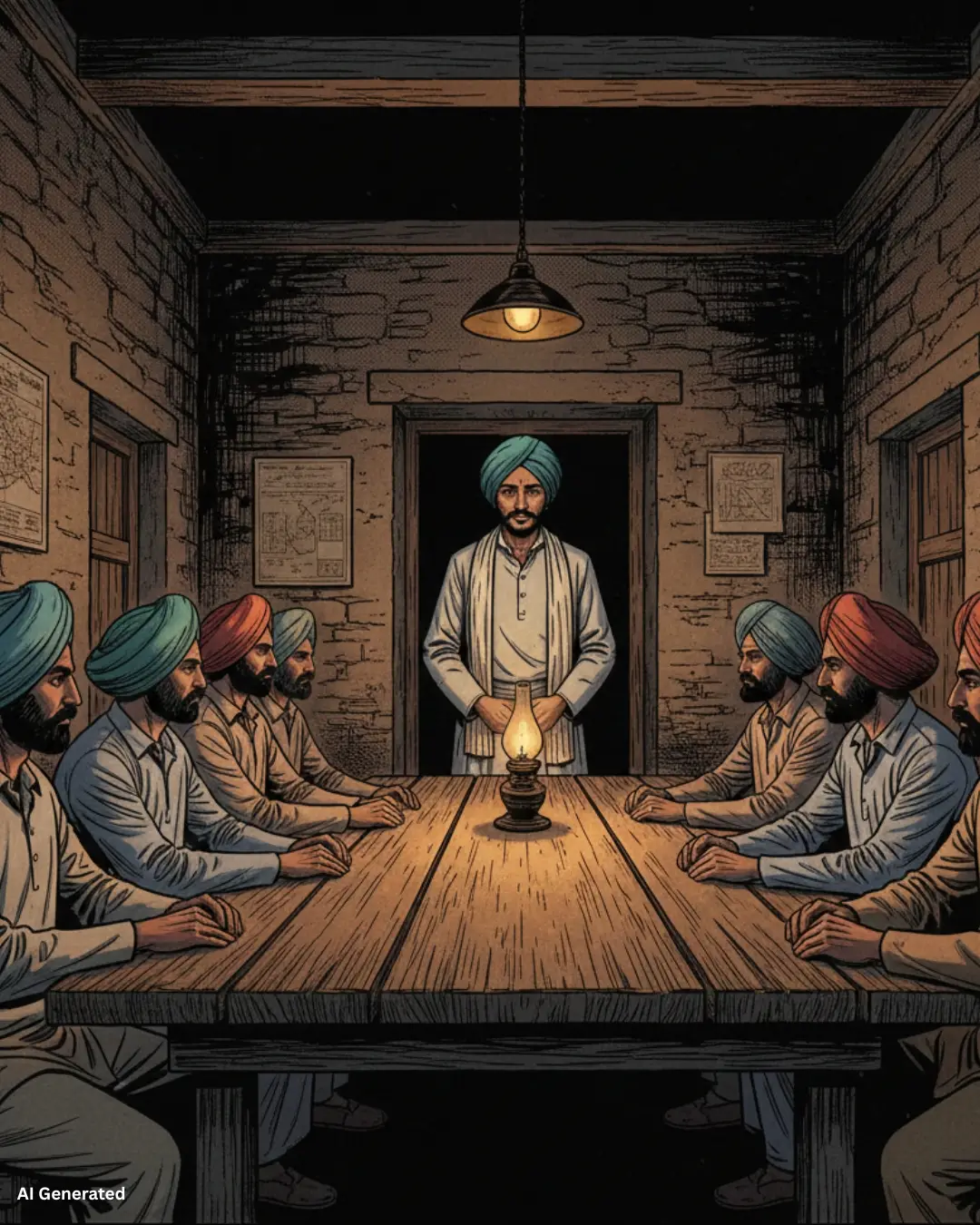
After they had left, Malharrao calmly led the chief representatives of every caste and every village into a secret chamber (room) of the Vitthal temple. He then carefully explained to them Heldon’s conversation with his officers.
Some asked politely, “What exactly is the ‘Queen’s proclamation’? Where is the Jallianwala Bagh and what happened there? Also, if the Dandi March was proceeding peacefully, how did people end up with their heads broken?”
Closing his eyes calmly Malharrao chanted the Mantragajar of the SwayamBhagavaan and began narrating what had transpired – one truth after another.
....to be continued