
Glimpses of the Untold History of the Indian Freedom Struggle - Part 3
मराठी हिंदी ગુજરાતી বাংলা తెలుగు മലയാളം ಕನ್ನಡ தமிழ்
Part - 3
Writer - Dr. Aniruddha D Joshi
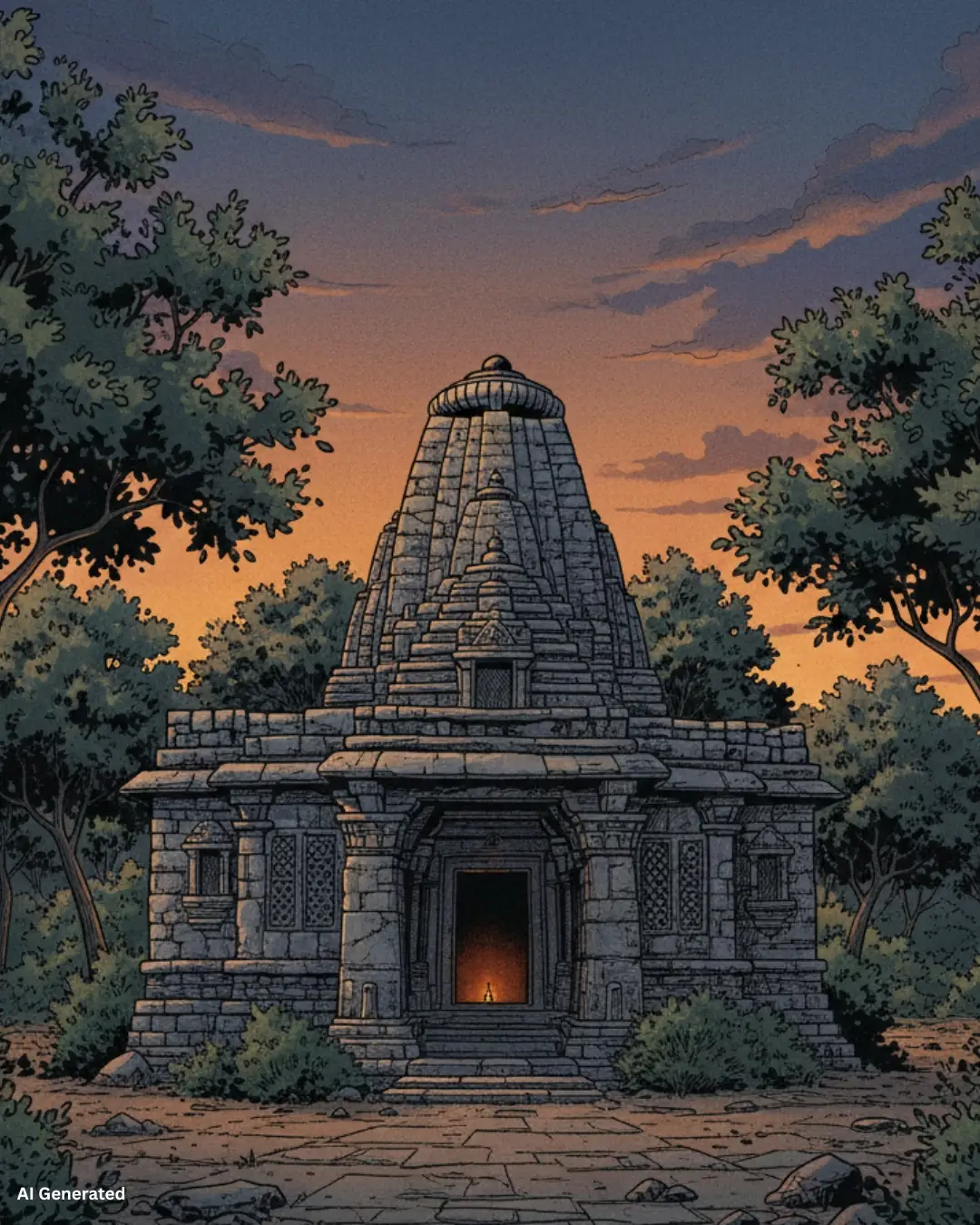
The ‘Dharpureshwar Mahadev temple’ was made from stone. The stones were collected from ruins of old, ravaged dharmashala, houses and large residential houses and so left no room for even the slightest suspicion that the ‘temple structure had been built merely three years ago’. Very well aware of the dangers of betrayal, Malharrao had secretly brought into the forest and placed at a designated place, a ‘Pindi of Lord Shankar’ and an idol of Lord Harihar and had had a wrecked wall constructed beforehand, by the side of the idol. The spot selected for it, had a thick growth of shrubs and bushes. Subsequently one day, Malharrao’s close and trusted aide ‘unexpectedly stumbled upon’ this temple, while on the trail of his lost calf. And then Malharrao, who had always been very magnanimous, came forward to rebuild it. Even the elderly villagers aged above ninety years, recalled that they had heard that around two hundred years back the Shiva temple here, had indeed been vandalized in an attack by foreign invaders, thus vouching for its ancientness (antiquity).

This temple was deliberately made known as a Shiva temple. Care was taken to ensure that the idol of Lord Harihar did not become a topic of popular talk because it was under this very idol that there was a cellar (basement) that opened into three tunnels in three different directions. The layout of the Shiva temple was peculiar and quite bizarre – such that it comprised of several rooms – to store material or articles used in the temple, to store the palanquins and big wooden chariots used on festivals, to make sandalwood paste, to make garlands of flowers and mainly to accommodate sadhus and pilgrims arriving from various regions. A noteworthy fact was that nobody could stay more than two nights in the rooms that offered accommodation. Should the stay exceed this period, one would have to move to dharmashalas of other temples.
The secret cellar, its tunnel passages and the residential rooms in the temple were the area Malharrao’s freedom fighters used for their activity and movement. Moreover, the sadhus and pilgrims housed in this temple were subjected to proper scrutiny and yet nobody was allowed a stay exceeding two days.
It was two groups of freedom fighters moving about in disguise that stayed here through relatively long periods. – one was the group of freedom fighters who operated underground and the other was the group of revolutionaries. Many secret cupboards and shelves stored all kinds of material meant for disguise. Dresses native to every part of Bharat were always available here in all sizes.
This temple had three aged priests (pujari) and all three were dear friends of Malharrao. Of these, one had learnt the Bengali language, the second had learnt Punjabi and the third, Hindustani i.e. Hindi which made it convenient for the revolutionaries from all over the country to be accommodated here.
As soon as he entered the temple today, Malharrao appropriately took darshan and hurried to the cellar. Whenever he had to go to the cellar in the day, the pujari closed the doors of the sanctum sanctorum under pretexts like ‘oil had spilled there’, ‘the sacred ash (bhasma) had blown off’, ‘a bird had entered through the window’, ‘a lizard was found’ etc. In the night of course there was no such problem.
Malharrao climbed down to the cellar and headed directly for room no. 13 of the 19 rooms in all. The door to every room had a number etched on it. ‘There were indeed a total of 19 rooms’ was the impression anybody would have had but there were three or four rooms bearing the same number and there were walls of certain rooms that opened into another secret room too.
It was after a gap of three whole years that ‘Shivaramrajan’, the civil engineer of this complex structure was here and that too with advance notice, disguised as a native of Northern Bharat and making use of the secret passage through the Hanuman temple outside the village.
Shivaramrajan, an ardent patriot, was originally from Madras (now Tamilnadu). He was fifteen years older than Ramchandra and ten years younger than Malharrao. He too worked in the Government services and had secretly joined hands with the father and son duo. He had excellent command over both Marathi and Hindi. So, Shivaramrajan was at times the Marathi-speaking ‘Shivram’, at times the Tamil speaking ‘Shivarajan’ and at other times even ‘Shivaraj’ from Northern Hindustan. But the father and son duo always referred to him as ‘Fakirbaba’, even in private because he (Shivaramrajan) travelled by rail or by ship in the guise of a sadhu of the Kabir sect. Even today, he was in the guise of a sadhu of the Kabir sect.
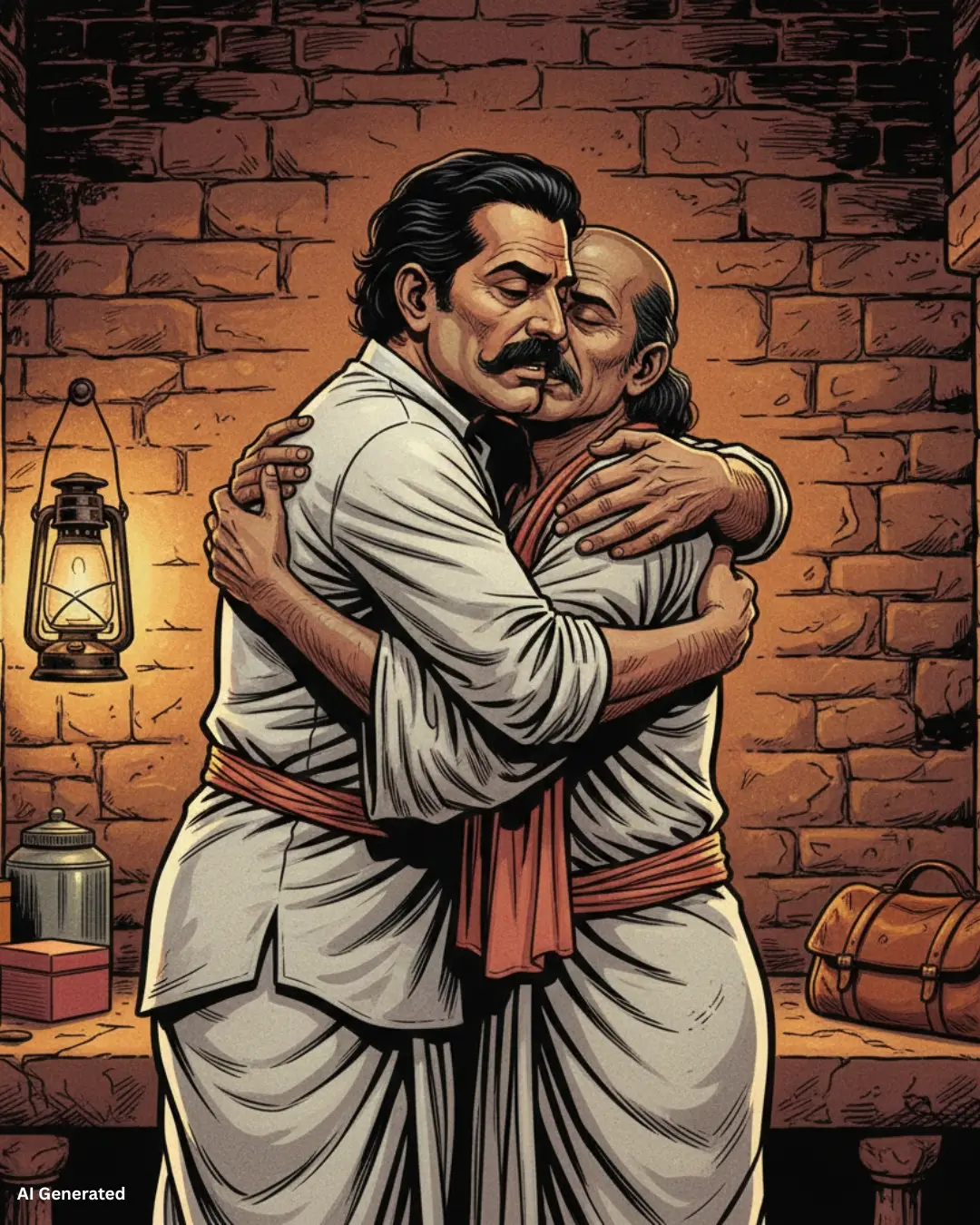
On entering the room, Malharrao closed the door securely. Fakirbaba and Malharrao embraced each other. Malharrao enquired about his well-being and then coming straight to the point asked, “Any fruitful trail?”
Instantly, Shivaramrajan’s face turned fierce. The fury in his eyes was burning coal. Just about managing to maintain composure, he began to speak. “Malharrao! It is the Bharatiya people around the revolutionaries, who are betraying them. This is exactly the fate that 99% of the revolutionaries have met with. Sometimes it is the neighbours, sometimes the Bharatiya informants of the British, sometimes people, who are tempted by the reward declared by the government and at times even the cowardly youth, who were earlier part of the movement but who later distanced themselves from it.”
“How much Bharatiya blood is being spilled and how much longer will it continue to spill? Teaching such traitors a lesson is, I feel, an utmost urgency.”
Malharrao’s sharp response came without delay, “Yes, true. The British government rewards traitors with all kinds of facilities. Who then, would punish such persons? Until today, we were engaged in providing help to revolutionaries and to freedom fighters operating underground. We had not been actual active part of any revolutionary mission that is to say of armed battle and guerrilla warfare.
I spoke to Ramchandra only the day before. Merely supporting revolutionaries or providing help to them or supplying them with weapons is not enough. Our entire group must take the plunge into the actual mission of revolution. And well, as for Ramchandra, he is fully prepared.
Moreover, since Bhagat Singh was hanged two months back, (23 March 1931) the entire country is seething with rage. No more delay now. Contact has been established very recently with ‘Subhashchandra Bose’, the leader from Bengal of the ‘Indian National Congress’. His thoughts are revolutionary and he is young, dynamic and spirited. Although completely a revolutionary on the inside, it is for the larger and all encompassing cause of the fight for freedom that he has accepted Gandhiji’s path.
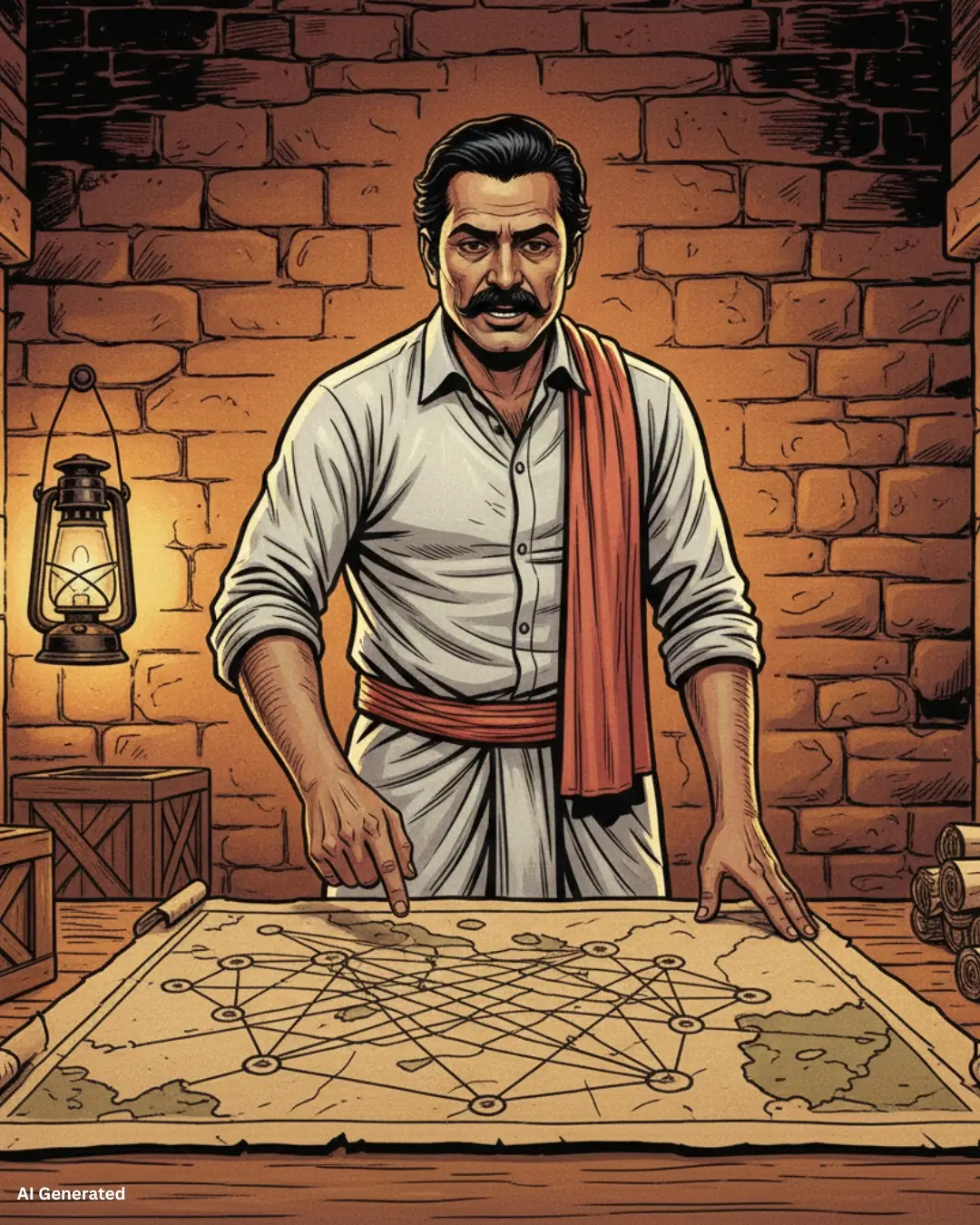
Like him, I too have outwardly become a non-violent patriot and I am going to begin working on the news that you have brought. Subhashchandra is of the opinion that it is necessary to build this kind of a network all through the country.
Let us take up the task of weaving the web and also that of teaching the traitors a lesson. These traitors are goats that must be slaughtered.”
“These traitors must find living in society and even life for that matter, burdensome, humiliating and a tribulation and this mission, we women will undertake first.” These words came from Jankibai. She had uttered them with utmost ease as she walked in through the secret door but with a face firm and hardened with determination.
……to be continued