
Glimpses of the Untold History of the Indian Freedom Struggle - Part 10
English मराठी ગુજરાતી বাংলা తెలుగు മലയാളം ಕನ್ನಡ தமிழ்
“The British intelligence department became alert, and within a week, fifty trained spies of Indian origin were sent into the kingdom of Jhansi under Rani Lakshmibai. They were supplied with ample financial resources.
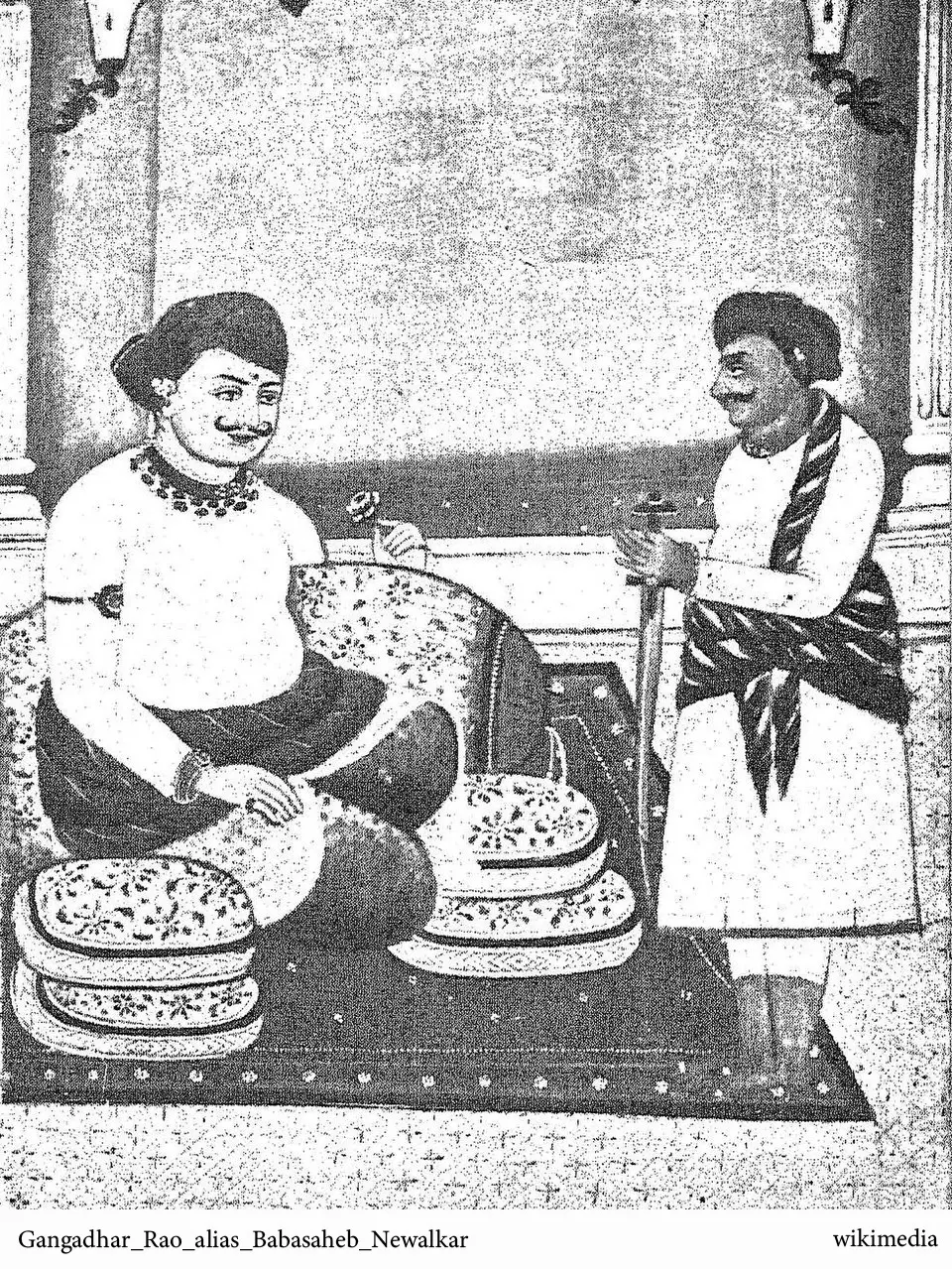
The princely state of Jhansi had already come under the dominance of the East India Company thirty to forty years earlier. The rulers of Jhansi were required to carry out every action only with the approval of a special British officer appointed by the Company. The king of Jhansi, Gangadhar Rao, was around fifty years of age and was in poor health. Under such circumstances, he was married to a girl named Mankarnika from the Tambe family. At the time of marriage, she was barely eight or nine years old. She was brought to Jhansi after turning fourteen. Within a year or two, she began to clearly understand the realities surrounding her.
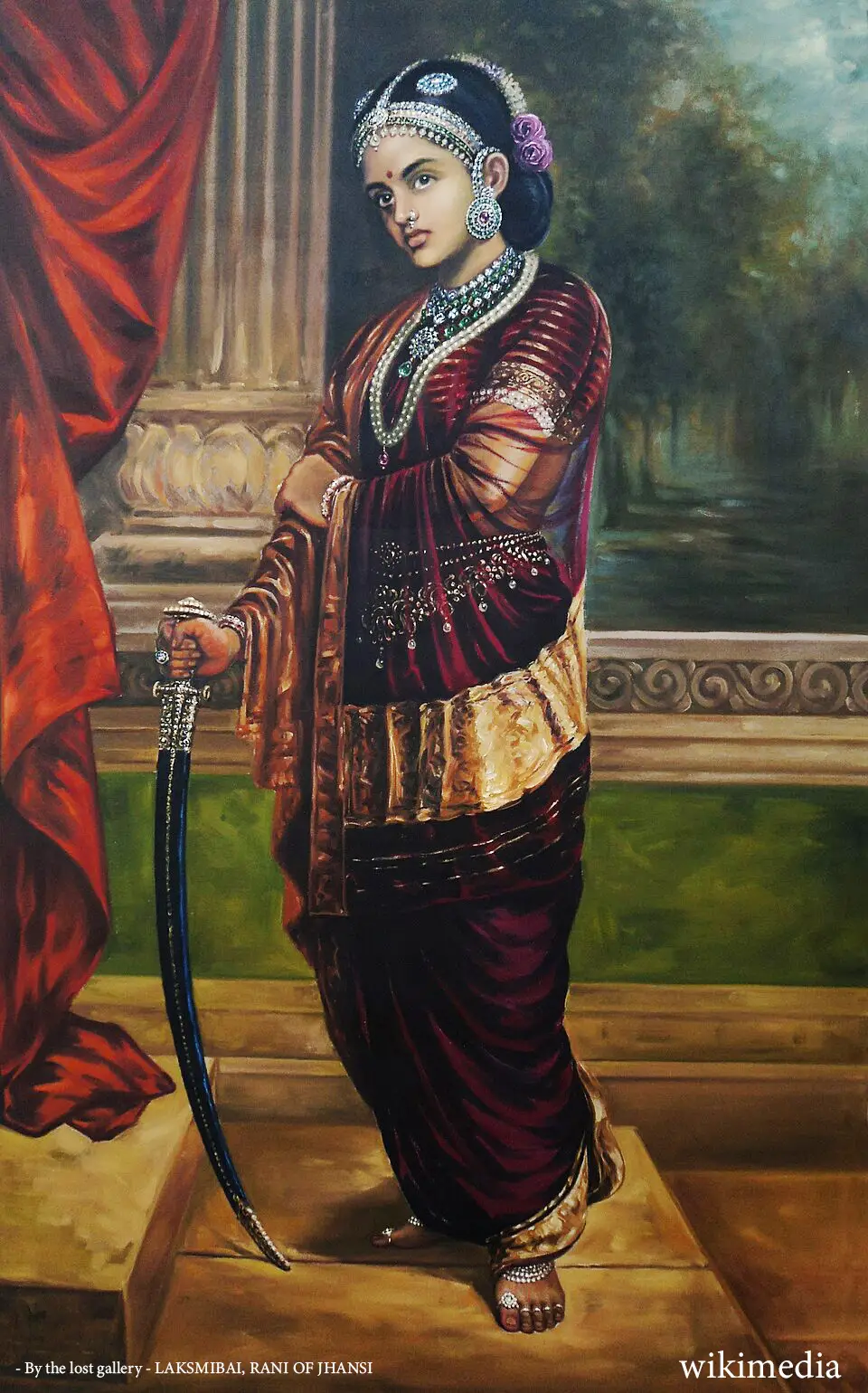
Mankarnika’s name after marriage was changed to ‘Lakshmibai’. As a child, Rani Lakshmibai used to play war games with companions such as Nana Saheb Peshwa and Tatya Tope. Observing her skill and enthusiasm, her father made arrangements with the permission of the Peshwas for her to receive formal training in warfare alongside Nana Saheb. From the ages of seven to fourteen, a total of seven years, Lakshmibai absorbed lessons in warfare and politics. Although Tatya Tope and Nana Saheb were older than Lakshmibai, they were still quite young, and Lakshmibai would tie rakhis to both of them.
It took her two years to settle into life in Jhansi. Thereafter, while visiting temples, meeting prominent women of the city, and listening to the grievances of the people, Rani Lakshmibai gradually began mingling with various sections of society. As queen, everyone, from government officials to merchants, was obliged to come and meet her whenever she summoned them.
Gradually, Rani Lakshmibai realized that her husband was afflicted by various illnesses and yet continued to shoulder the burden of governance with determination. However, his authority was limited. His kingdom was independent only in name; in reality, the British Company government had bound him tightly on all sides.
As she travelled throughout the kingdom, she began carefully gauging public sentiment. She realized that officers of King Gangadhar Rao’s army who were loyal to the British would inevitably stand with them and would not obey either Gangadhar Rao or her. Likewise, merchants involved in various British trading enterprises would also always support the British.
Upon understanding this reality, Rani Lakshmibai began conversing on simple matters with ordinary citizens, farmers of Jhansi, the twelve traditional village service groups, agricultural labourers, and construction workers.
In systematically expanding her network of contacts, she received immense assistance from one of her attendants named Jhalkaribai. She was a woman from what was then known as the Koli community, and Rani Lakshmibai rightly identified her worth. Jhalkaribai was older than Lakshmibai, but she could read and write, and because she had the opportunity to train in warfare alongside the queen, she gradually became proficient in martial skills. By bribing a British soldier stationed in the Jhansi army, Rani Lakshmibai arranged for Jhalkaribai to be employed as a cleaner in the artillery unit. Under this pretext, a British sergeant trained Jhalkaribai for one and a half years in operating cannons and handling ammunition and related equipment. At times, Rani Lakshmibai herself would enter the unit in disguise as Jhalkaribai’s sister, and she, too, gained mastery in operating cannons as well as guns."
While all this was underway, Rani Lakshmibai became pregnant and was advised to rest.
Using this period of pregnancy to her advantage, Lakshmibai began inviting various subjects along with the women of their households for meetings, allowing her to gain a deeper understanding of public sentiment.
One day, during a private conversation, Rani Lakshmibai said to Jhalkaribai, “Not a single citizen in our kingdom is truly happy. Ordinary people of all castes, especially farmers and agricultural labourers, are being mercilessly crushed due to British interference. Something must be done. Let us together establish an organization of intelligent and courageous women of the kingdom. The British officers will never even suspect that women could be involved in such work.”
With this, Jhalkaribai immediately set to work, and the ‘DurgaDal’ was established. A woman named ‘Motibai’ became proficient in warfare and espionage, while another woman named ‘MundarBegum’ learned wrestling and became Rani Lakshmibai’s bodyguard.
At the same time, Diwan Raghunath Singh and Lalabhau Bakshi, the deputy commander of the Jhansi army, also began cooperating with the queen’s mission. Another military officer named ‘Khudabaksh Basharat Ali’ joined the effort along with his wife. Middle-class women such as Kamalkumari Chauhan and Rajkunwar Yadav also began meeting Rani Lakshmibai regularly.
At the appropriate time, Rani Lakshmibai gave birth to a son. However, the child was extremely short-lived. While recovering from this grief, Lakshmibai received great support from Motibai, Jhalkaribai, and MundarBegum.
One day, while Rani Lakshmibai sat alone in her palace, weeping, she witnessed a British sergeant officer brutally beating ten or twelve citizens in a distant area. She sent Motibai to gather information. Motibai hid behind a hut in that area and began relaying information back to the queen, while Mundar Begum and Rajkunwarbai were assigned as messengers.
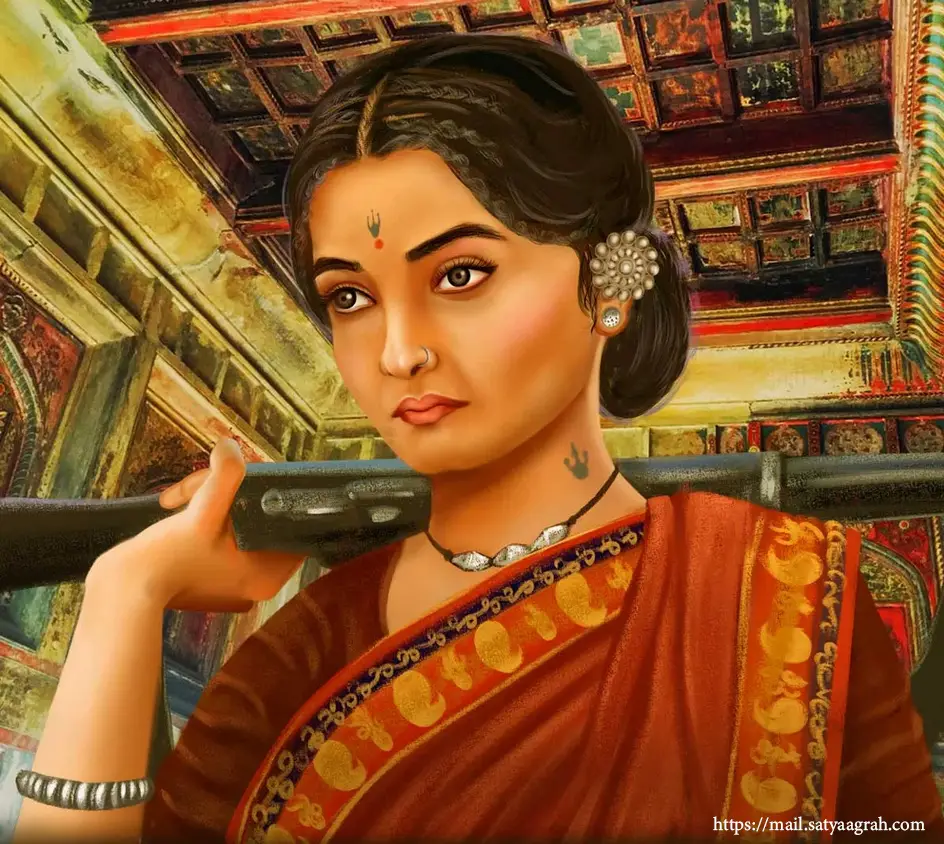
At that time, Rani Lakshmibai was dressed in simple clothing due to her grief. She wore no jewellery—not even a nose ring. Rajkunwarbai hurried into the palace and, she felt certain that it was Jhalkaribai sitting in Rani Lakshmibai’s palace. She blurted out, “Sister Jhalkari, the fact that Rani Lakshmibai treats you with respect does not mean you should sit on the queen’s seat.” MundarBegum, who followed her in, made the same mistake.
It was then that all three realized, for the first time, the striking resemblance between Lakshmibai and Jhalkaribai when Lakshmibai was dressed in ordinary clothes.
The British officer had been mercilessly beating those ten or twelve people for a minor mistake and for tax collection, with extreme cruelty. During the beating, a small child sitting on his father’s lap was killed.
Upon receiving this news, Rani Lakshmibai immediately set aside her personal grief over her son’s death and swiftly resumed the work of the DurgaDal. Jhalkaribai’s husband, Puransingh Kori, a junior officer in the Jhansi army, began training Jhalkaribai and other women in warfare at a palace located outside the city. With the consent of the ailing King Gangadhar Rao, Lakshmibai appointed Puransingh Kori to the rank of ‘Naik’ in the artillery unit.
Gradually, the number of women in the Durga Dal kept increasing, and under the guidance of Diwan Raghunath Singh, farmers and labourers also began organizing themselves.
By Vijayadashami of the year 1856, Rani Lakshmibai had built a force of two thousand women soldiers of the DurgaDal, along with the Mahadevshiva group of soldiers working under Diwan Raghunath Singh.”
(To be continued.......)