
Glimpses of the Untold History of the Indian Freedom Struggle - Part 1
मराठी हिंदी ગુજરાતી বাংলা తెలుగు മലയാളം ಕನ್ನಡ
Glimpses of the Untold History of the Indian Freedom Struggle
The history of India’s freedom struggle, as commonly known, is but a fragment of a far greater and more profound saga. Beyond the familiar names and celebrated milestones lies an untold narrative, one shaped by men and women whose sacrifices were no less than divine, yet whose stories remain absent from history books and memory.
In his insightful editorials published in Dainik Pratyaksha, Dr. Aniruddha D. Joshi brings to light this forgotten history. He unfolds the lives of extraordinary personalities such as warriors, thinkers, and silent torchbearers who stood with unwavering commitment, courage, and devotion to their motherland. As the narrative progresses, a multitude of unheard names surface, individuals whose lives were defined by valour, sacrifice, and an unshakable resolve for freedom. Alongside iconic figures such as Rani Lakshmibai of Jhansi emerge her equally valiant associates, whose bravery matched hers but whose names history failed to preserve. The narrative then moves into the era of Bal Gangadhar Tilak, revealing a dimension far deeper than his well-known public image. Moving ahead, these editorials shall uncover the countless lesser-known revolutionaries, organizers, and dedicated workers who stood beside him. Their silent sacrifices, intellectual rigor, and fearless actions formed the backbone of the freedom movement but have remained largely unrecorded because these real unsung heroes were ignored and neglected by the so-called historians.
This is not merely a historical account; it is a tribute to the unseen foundations of India’s independence. Rich in courage, dedication, and moral strength, these narratives invite us to rediscover the true depth of our freedom struggle and to honour those who gave everything yet asked for nothing in return.
----------------------------------------
Part -1
Writer - Dr. Aniruddha D. Joshi
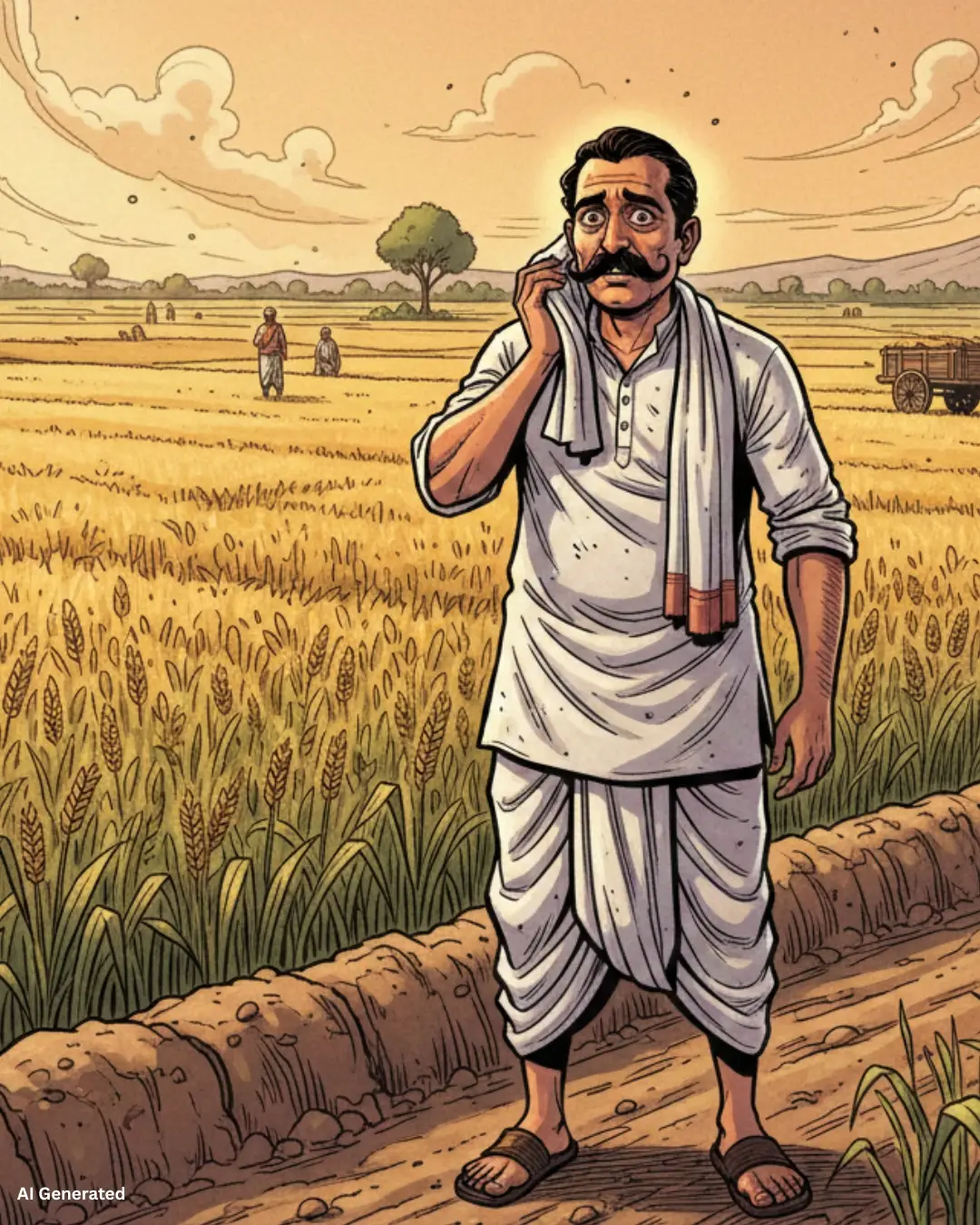
Wiping the sweat off his forehead, Malharrao walked over to the edge of the field. The day had really burdened him with work. Almost a hundred of the labourers working on his fields were absent and the jobs of harvesting, threshing and winnowing of the ready crop were in full swing. Apart from wheat, Bajri and corn, Malharrao grew Toor, Urad, Moog, Matki and Chickpea in his fields meaning he grew Kharip crops, whose grain is sown in June as also Rabbi crops, whose grain is sown in November.
Over and above this, Malharrao owned a huge expanse of plantation land. The mango grove itself stretched over a hundred and fifty acres. Also, orchards of bananas, of pomegranates, of papayas and of guavas spread over another about eight hundred acres. Besides, he owned several pastures where grass was grown and then sold as fodder for cattle. Then there were seven forests too that he owned. Huge trees in these forests were felled and processed to make logs and timber in the sawmills that Malharrao had set up. He even had a flourishing business of selling wood used as fuel and as firewood.
In addition to the above, a two hundred acre barn housed cows, buffaloes and goats. His dairy business too fetched him tremendous profit and the year before, Ramchandra, his only son and so very dear to him, had bought some land specially for a poultry farm. All relevant arrangements had been made and GovindDaji, an experienced worker, who had walked out on his job, humiliated while working for a businessman in this same field, was employed there as the manager.
Today had been fairly disorderly. Most of the labourers working on Malharrao’s fields belonged to a neighbouring village and it so happened that that day, British officers were on a visit to this village for inspection and no villager was allowed to leave the village.
Those were the times of the revolutionaries and a traitor had leaked the information to the British authorities that some young Marathi-speaking revolutionaries did frequent this village. It was only two years since Bhagat Singh was hanged by the British government. In every nook and corner of Bharat, people were already seething and now their blood boiled.
Today, the work load had truly burdened Malharrao. He himself had had to get down to work. Earlier, his son Ramchandra worked as a high-ranking official in a textile mill in Mumbai. But in consideration of his intelligence and his academic qualifications the British Governor selected him to serve in the Government service. He was now a top-ranking government officer. He was officially in charge of the forest department of the region extending over Maharashtra, Gujrat, southern Madhya Pradesh and northern Karnataka. He was the supreme authority in the department of this region and reported directly to the Governor. There was no British officer holding an intermediary post between the two and so for a Bharatiya officer to hold an intermediary post, was completely out of the question.
Ramchandra was always on tour. In the ‘Kot’ (Fort) area of Mumbai, he had a spacious, in fact an enormous bungalow provided by the Government. Only two or three of the provincial officers had direct access to the Governor and Ramchandra’s name topped this list.
Not only that, his performance over the last four years had earned him three private meetings with the Viceroy of India in the latter’s (the Viceroy’s) special chambers. The meetings had no other person present apart from the Viceroy, the Governor of the region and Ramchandra. Consequently Ramchandra had gained in stature and carried considerable clout not only in the region but elsewhere in Bharat too.
However, it was only Malharrao, who knew that although on the face of it, Ramchandra was in charge of the forest and agriculture department, he was in actual fact assigned the task of weakening the independence movement in the region.
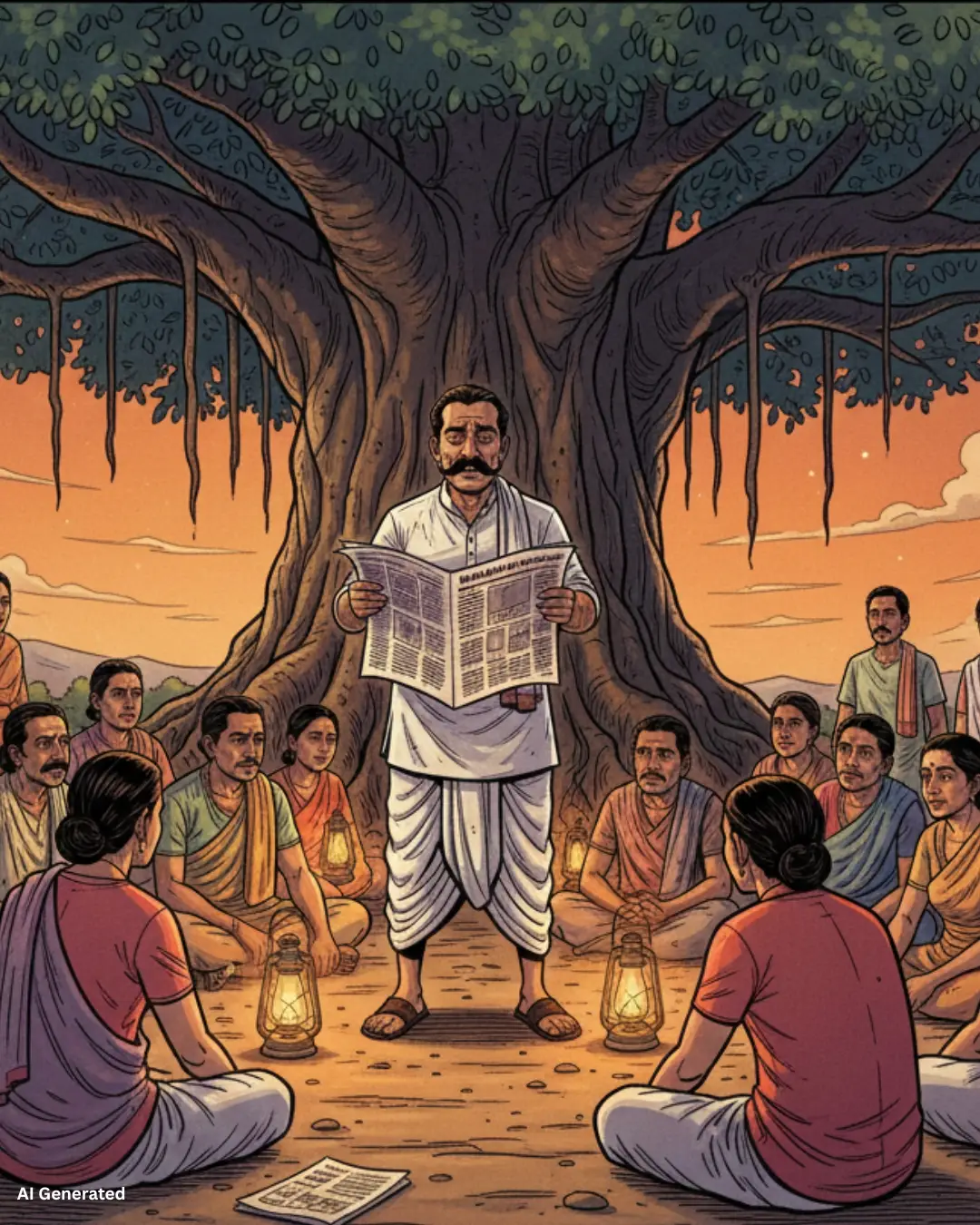
When this responsibility was assigned to him, Ramchandra sent for his father, urgently requesting him to come down to Mumbai especially since Malharrao was an ardent admirer of Lokmanya Tilak. Malharrao may not have been visibly in the forefront of the independence movement but he did contribute to it by way of providing funds for the movement, getting secret pamphlets printed, secretly making accommodation available for the freedom fighters, taking care of their food and ensuring their secrecy and the secrecy of their covert activity and most importantly reading out to the villagers, the editorial in Lokmanya Tilak’s newspaper every evening.
After the demise of Lokmanya Tilak in 1920, Shri N. C. Kelkar ensured the uninterrupted publication of his (Lokmanya Tilak’s) newspapers. Gandhiji’s ideology of non-violence had gained ground and its strong hold over the people’s minds was increasing. Malharrao had even participated in the Dandi March i.e. the Salt Satyagraha movement of 1928. But, that the oppressive foreign power would grant freedom in response to non-violent means, was a possibility Malharrao had long lost trust in, - in fact back in 1928 because he had witnessed right before his eyes, the heads of many unarmed, innocent persons – even of the elderly and of women – break; and Malharrao, with his values and mindset of a warrior, just could not bear it.
However, Lokmanya was now no more. Gandhiji was very firm and determined to adhere to the path of non-violence. There were rebellions of revolutionaries in Bengal and Punjab. But the betrayal of the local Bharatiya traitors led to the revolutionaries being caught and hanged or they straight away even ended up falling prey to the Britishers’ bullets.
This had, over the last three years, distanced Malharrao from active participation in the freedom struggle. He was unable to find a way out. In actual fact, it was a leader that he was unable to find. It was only after procuring all information about the circumstances that the British had entrusted the secret responsibility to Ramchandra. Their report stated – ‘Ramchandra is totally disconnected from politics. His father Malharrao, an extremely wealthy landlord, farmer and businessman, though a great admirer of Tilak, has been disconnected from politics in the recent times.’ It was this very report that had cleared the way for Ramchandra to receive the responsibility.
It was with much apprehension and worry that Ramchandra broke the news of his new responsibility to Malharrao, immediately on the latter’s (Malharrao’s) arrival in Mumbai. The news was invariably going to enrage Malharrao - Ramchandra was very certain that it would. He himself was not at all willing to betray Bharatmata, his motherland. But had he declined the responsibility, he could have been put behind bars or could even have been killed for fear of eventually exposing the secret plan of the British authorities.
Malharrao listened to all that Ramchandra said very calmly and then, eyes closed and head lowered, he sat on in his favourite armchair, maintaining his calm. The still of those five minutes was unbearable for Ramchandra. Five minutes later, Malharrao’s armchair was rocking in gentle rhythm. There were rocking armchairs in those times.
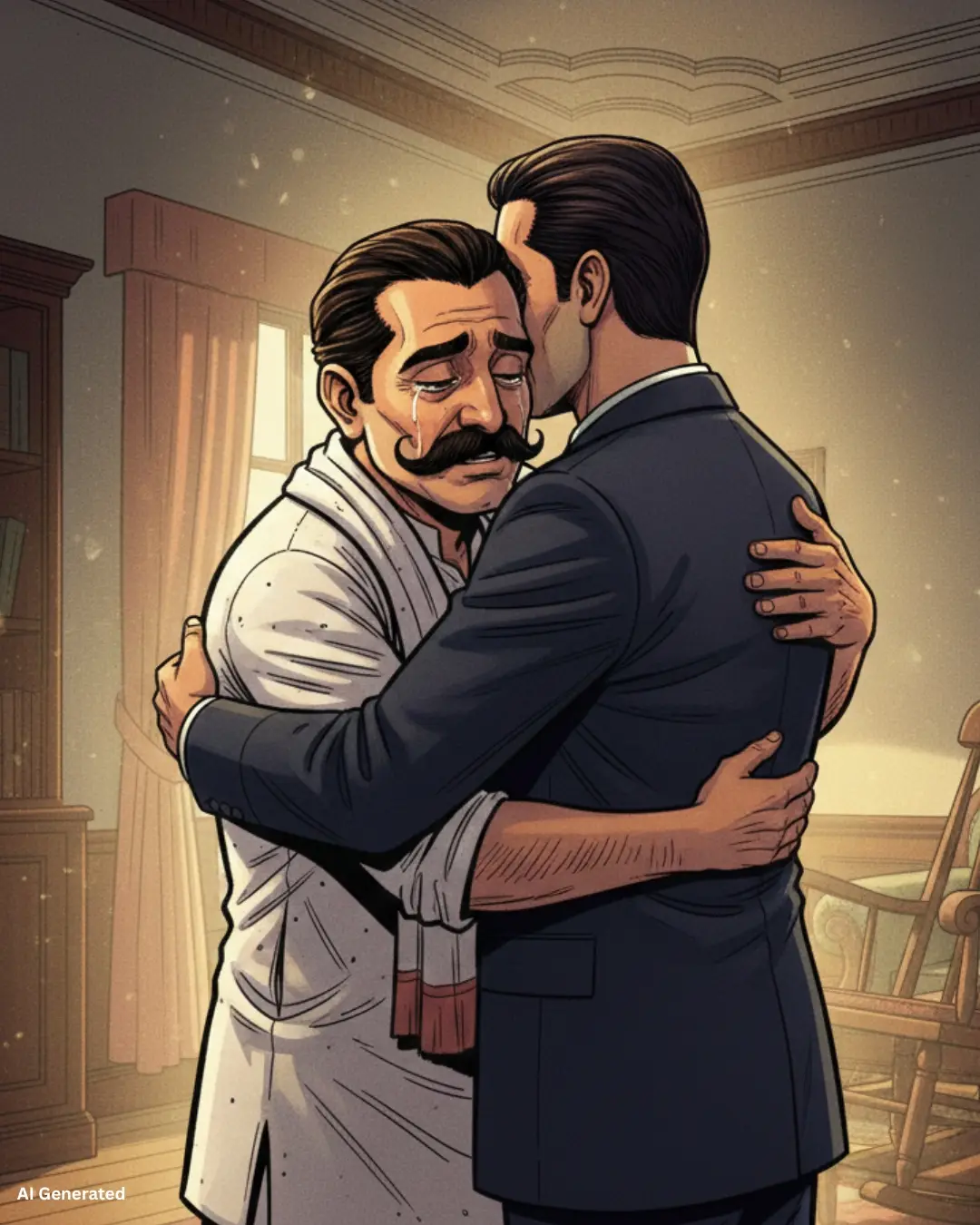
After about ten minutes Malharrao opened his eyes and rising from his chair, he held Ramchandra in a tight embrace. “Do take good care of the forest and agriculture department. After all, that means nurturing mother earth. Also, do accept this responsibility from the British. But this secret responsibility must prove beneficial to our Bharatmata and must prove of help to the patriots. Your name may not go down in history but you will certainly find a place in the heart of the SwayamBhagwan Trivikram. Remember this one thing: ‘He’ is the only One, who matters, He is the only One, who is true.”
Sitting on the embankment, Malharrao was waiting for a message from Ramchandra. Restraining the hundred odd labourers to the village was also actually Malharrao’s idea, which he had suggested to Ramchandra. All the focus and strength of the police force would thus be centered on the neighbouring village and pistols and cartridges would be dispatched to Pune from Malharrao’s mango grove.
(to be continued)