
Glimpses of the Untold History of the Indian Freedom Struggle - Part4
Part - 4
Writer - Dr. Aniruddha D Joshi
As planned in advance, Jankibai had come all the way from Mumbai specifically to meet Fakirbaba, also known as Shivramrajan. Shivramrajan had known Jankibai well for the past three years. He was fully aware of how beautifully intelligence, sound judgment, fearlessness, and restraint had come together in this young woman of tender age. Blessing Jankibai as she bowed respectfully before him, Fakirbaba said, “Child, in most regions of North India, women still move about with the end of their sari (pallu) pulled down over their heads, covering even their faces. This is noticeable even in cities. However, among elite women in major cities, the presence of the modern world is beginning to show itself gradually. These women are moving independently and are also receiving education. Although women in North India have not progressed in education to the same extent as women in the Mumbai–Pune region, many women from the households of lawyers, doctors, engineers, businessmen, and government officers have begun to keep only their heads covered instead of fully veiling their faces. Some among them are slowly advancing in modern attire, education, and social reform, much like women of similar standing in Pune and Mumbai.
Likewise, women in Central and South India are also beginning to receive education. Girls have started attending schools in many cities, and in some places, separate schools exclusively for women have even been established. However, women in Mumbai and Pune are advancing at a much faster pace and have begun participating actively in the freedom struggle as well.
While carrying out the task of teaching traitors a lesson, it is absolutely essential that we maintain secrecy and exercise patience. One must enter this work with the awareness that our actions may never be recorded in history. Even the men involved in our mission will have to outwardly present themselves as supporters of the British. It is crucial that every member of our group understands that even when freedom is achieved, our names may not appear on any list of patriots. I have trained many such male workers of different age groups across regions, and my wife has prepared women for this work in our Madras region.
Jankibai, your work and that of Ramachandrarao is progressing strongly. I have received your message that you have arranged a meeting with some of your special women associates. I do not know where the meeting is being held or what the exact subject is. Since you have come here personally, does that mean the meeting is being held here?”
Malharrao replied, “Yes. At present, every educated person in Mumbai and Pune is under close surveillance. Therefore, even public gatherings such as women’s haldi-kumkum ceremonies, women’s education conferences, nursing training sessions for widows and abandoned women, or tailoring workshops run for such women are being monitored closely. The British fear Mumbai, Pune, and Calcutta far more than any other regions, because the maximum number of revolutionary activities and armed uprisings have taken place in these areas. Punjab, too, remains volatile. Many Sikh youths are ever ready to die for the country, but it is these very youths who are being eliminated—and preventing such losses is also our responsibility.
Fakirbaba! For these reasons, after careful thought, the meeting has been arranged right here in this Shiva temple. Like-minded people from all provinces of India have already begun gathering here. All of them are arriving, and will continue to arrive, in the simple garb of traditional Marathi attire, as Warkaris, devotees of Vitthal.
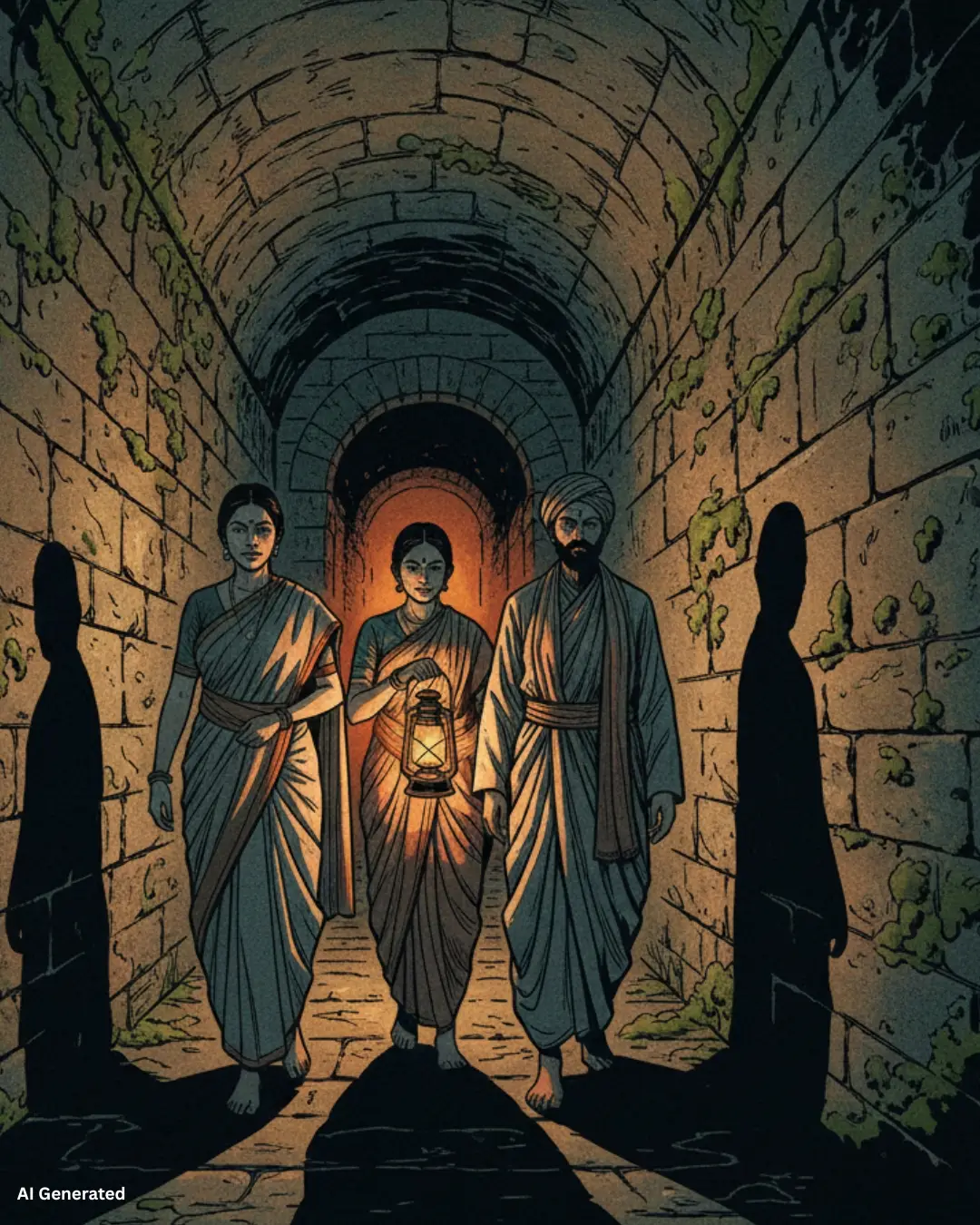
From this Shiva temple, there is an underground passage leading directly to the Vitthal temple located beyond the western boundary of the village. A similar secret arrangement has been created there as well. Our estate manager, Govinddaji, is the chief bhajan leader at that Vitthal temple. Govinddaji and Jankibai will introduce you to each representative. After that, you may speak freely, share everything you have seen while travelling across the country and all the secret information you have gathered.”
Using the underground passage, the three of them reached the Vitthal temple. Preparations for a week-long Naamsaptah (chanting or reciting the name of God for seven days) were in full swing. Govinddaji, who usually moved about in modern attire such as shirts and trousers, was now dressed in a dhoti and simple upper garment, with a veena slung around his neck, a tulsi garland, a tilak of gorochana and sacred ash on his forehead, and cymbals in his hands, moving about everywhere in this form.
For a moment, even Fakirbaba failed to recognize Govinddaji. In truth, it was Govinddaji and Shivramrajan who shared the deepest friendship. While Fakirbaba’s lips constantly uttered the name of Rama in the Kabirpanthi tradition, Govinddaji’s lips constantly chanted the name of Vitthal in the Warkari tradition.
After the evening meals were over, as per the village custom, male and female devotees began gathering for Govinddaji’s kirtan. Naturally, nearly thirty percent of those present were souls burning with longing for India’s freedom.
Most importantly, Jankibai herself had introduced Govinddaji to many of them. Arrangements for such meetings were made within the Vitthal temple even amidst large crowds of devotees. Adjacent to the sanctum were classrooms for Sanskrit and Vedic recitation, as well as, crucially, rooms meant for silence and meditation. It was inside these rooms that all the secret meetings took place.
Govinddaji began the kirtan with the sacred chant “Jai Jai Ramkrishna Hari,” the divine invocation of the great saint Jagadguru Tukaram Maharaj. The narration began with stories of Ravana, who oppressed his subjects. It described how Ravana had deceitfully seized Kubera’s kingdom, how he strangled the original Vedic faith, and how he slaughtered saints and sages. As the ‘Shrirang’, i.e. the narrative portion drew to an end, the ‘Uttarang’, i.e. the concluding part began, explaining the purpose behind the incarnation of Lord Ramachandra.
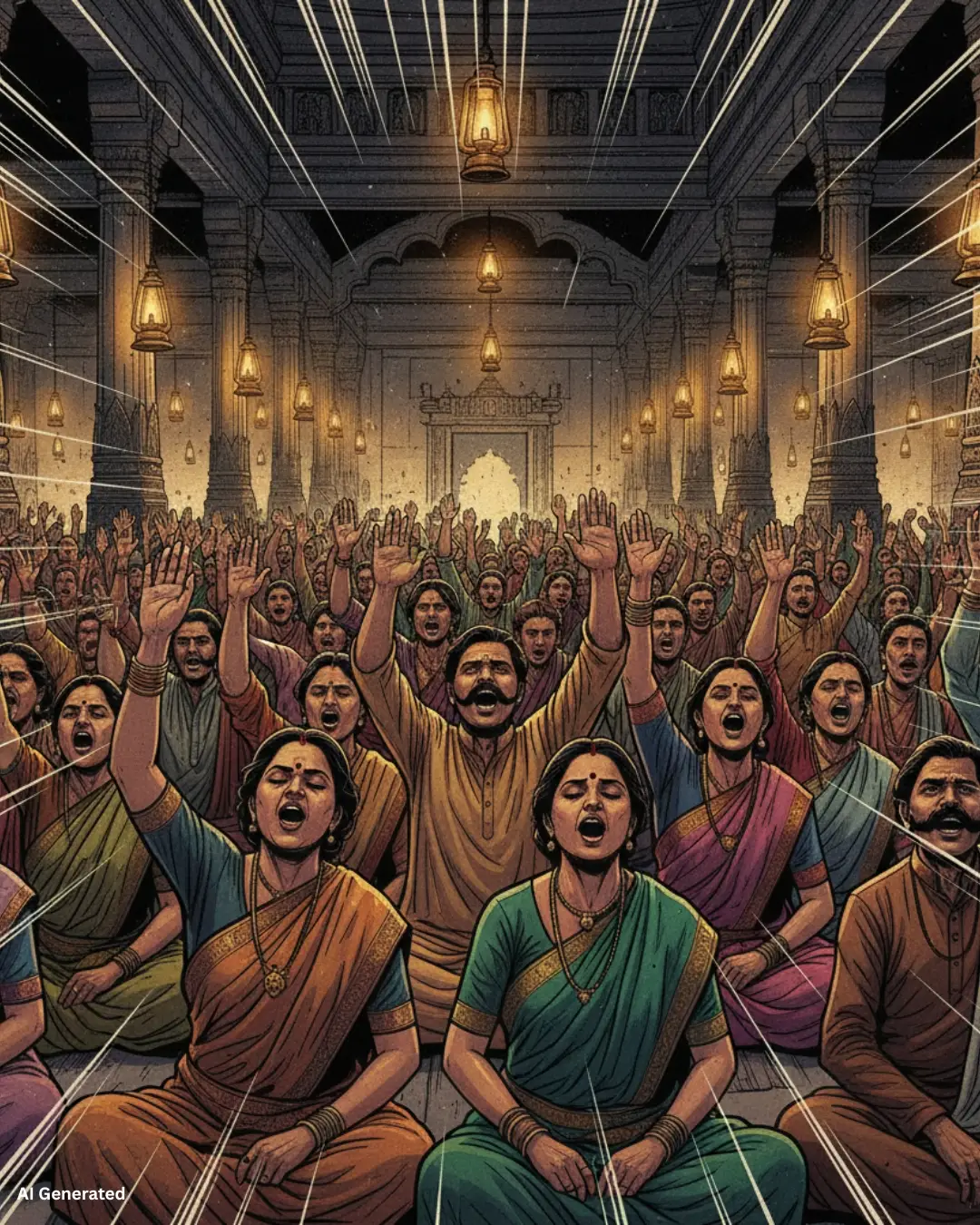
Finally, the chant “Ram Lakshman Janaki, Jai Bolo Hanuman Ki” rose loudly. The devotees, lost in the kirtan, could hear nothing except the chants, the clashing of cymbals, and the beat of the mridangams.
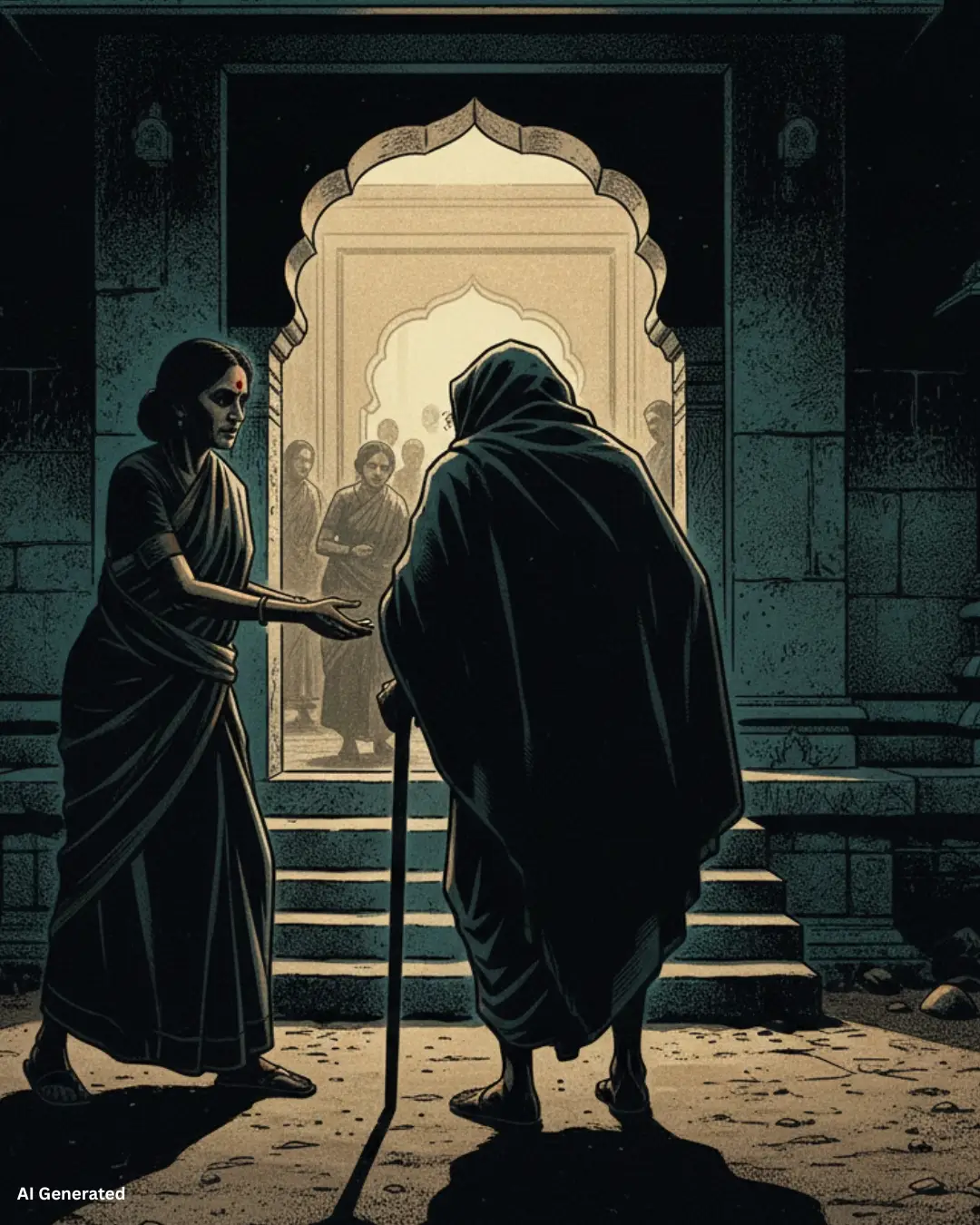
Seated near the entrance for the bhajan was a bent-backed elderly man. Coughing, he quietly stepped out, leaning on his walking stick. In the darkness outside, a woman joined him.
As usual, at the end of the kirtan, a wealthy trader from a nearby large village and his brother, an Indian police officer, arrived in their horse-drawn carriage to take part in the procession and display their presence.
What stepped down from the carriage were their mutilated, lifeless bodies.
That elderly man and the woman were once again calmly participating in the bhajan, while the carriage driver screamed in panic, “There’s been a robbery! Save my masters!”—all the while making sure for himself that the two men were indeed dead.
From within the temple arose a triumphant chant: “Pandharinath Maharaj Ki Jai!” (Victory to Pandharinath Maharaj!)
That was the signal—passed silently among them all.
to be continued...