
Glimpses of the Untold History of the Indian Freedom Struggle - Part 26
मराठी हिंदी ગુજરાતી বাংলা తెలుగు ಕನ್ನಡ தமிழ்
Gradually, a constant crowd of different people began to gather around Tilak. In fact, even if Tilak merely set out for an office located just five minutes away, there would still be a group of at least fifty to a hundred people accompanying him.
This gathering around Tilak was not merely a crowd of onlookers. Anyone who felt the need to fight against the British or who dreamed of India’s independence would inevitably come to meet Tilak. This was because, during that time, people had begun to lose faith in the leaders who presented themselves as leaders of the Indian National Congress.
Across the entire country, Bal Gangadhar Tilak was the only truly popular leader. As a result, all the attention of the British government became focused on Lokmanya Tilak.
Tilak never openly declared in public that people should adopt the path of armed revolution. He had understood the deep fear of the British that had taken root in the minds of Indians after 1858. Therefore, he chose the path of gradually reducing this fear from the minds of the people. Through his writings in his two newspapers, Tilak strongly criticized the British government in sharp and forceful language. In his public speeches, he expressed intense anger about the oppression carried out by the British and continually encouraged people to come out on the streets and oppose them.
In 1894, Bal Gangadhar Tilak initiated the public celebration of Ganesh Utsav. The largest celebration began in his own Wada (residence). Within a year, this practice spread across major cities of Maharashtra such as Pune, Mumbai, Nagpur, Nashik, Ahmednagar, and Satara, and also to regions that are now Madhya Pradesh, Gujarat, Karnataka, Andhra Pradesh, Telangana, Bengal, Punjab, and Uttar Pradesh.
Tilak had four main objectives behind starting this festival.
First, since it was a religious celebration, the British government could not ban it under the Queen’s proclamation, and Shree Ganesha held the foremost place in rituals and auspicious occasions across India.
Second, during the ten days of the festival, various programs were organized in the afternoons and evenings. These included mythological plays performed by children, devotional singing by different groups, games such as kho-kho, kabaddi, and lagori, running and long jump competitions, mimicry, and magic shows.
Large crowds began to gather to watch these programs and to seek darshan of Shree Ganesha. People attending these events started engaging in conversations on various topics. Tilak’s trained and enthusiastic young volunteers moved among the crowds, encouraging discussions centered on the idea that the British were unjust and that Indian culture was superior.
After nearly thirty to thirty-five years, Indians began openly discussing such topics again. Many people started shedding their fears and became ready to participate in Tilak’s work.
Third, through this festival, Tilak began collecting funds with the help of his associates. These funds were used to establish akhadas and gymnasiums, organize outdoor sports competitions, and most importantly, to support revolutionaries. As a result, new groups of revolutionaries began to emerge in Maharashtra, Bengal, and Punjab.
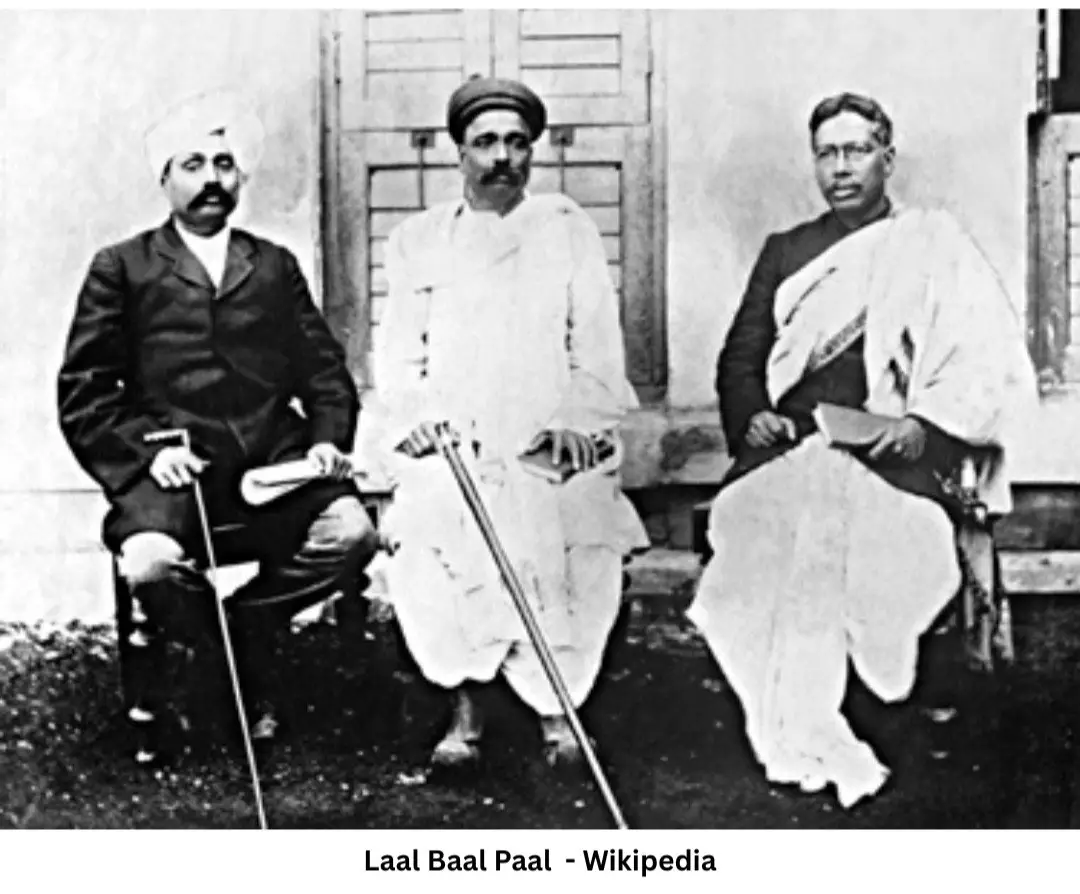
From Punjab, Lala Lajpat Rai, and from Bengal, Bipin Chandra Pal became Tilak’s associates, and together they became famous across India as the “India’s triad” known as Lal-Bal-Pal.
Fourth, lecture series were organized as part of the festival, which helped people get accustomed to gathering in open spaces to listen to speeches. To ensure that common people did not feel afraid, the lectures in the first year were kept on simple topics such as Shivaji Maharaj and his valor, the Mahabharata war and the Shreemad Bhagwad Gita, Adi Shankaracharya and his work, various religious observances and their significance, and stories from the Ramayana. Through these Ramayana narrations, the selected storytellers subtly portrayed Ravana as the root symbol of the British, though they never directly used the word “British.”
Within a year, the fear of attending public gatherings completely disappeared. Inspired by this, Tilak established the Shri Shivaji Maharaj Fund Committee in 1895. Its main objectives were to celebrate Shivaji Maharaj’s birth anniversary publicly and to proudly raise the banner of Chhatrapati Shivaji Maharaj. Another objective was to properly maintain Shivaji Maharaj’s samadhi at Raigad and to organize educational tours for young men and women to Raigad and Rajgad.
During each such tour, one of Tilak’s dedicated and knowledgeable associates would personally accompany the group and explain in detail the great struggles led by Chhatrapati Shivaji Maharaj.
The main emphasis was on how Shivaji Maharaj and his Mavalas fought and defeated the vast Mughal empire, which had an army of over five hundred thousand, as well as the Adilshahi of Bijapur.
Through these tours and programs, the fear of the British in the minds of ordinary Indians began to gradually diminish, and large numbers of people started participating in Tilak’s initiatives.
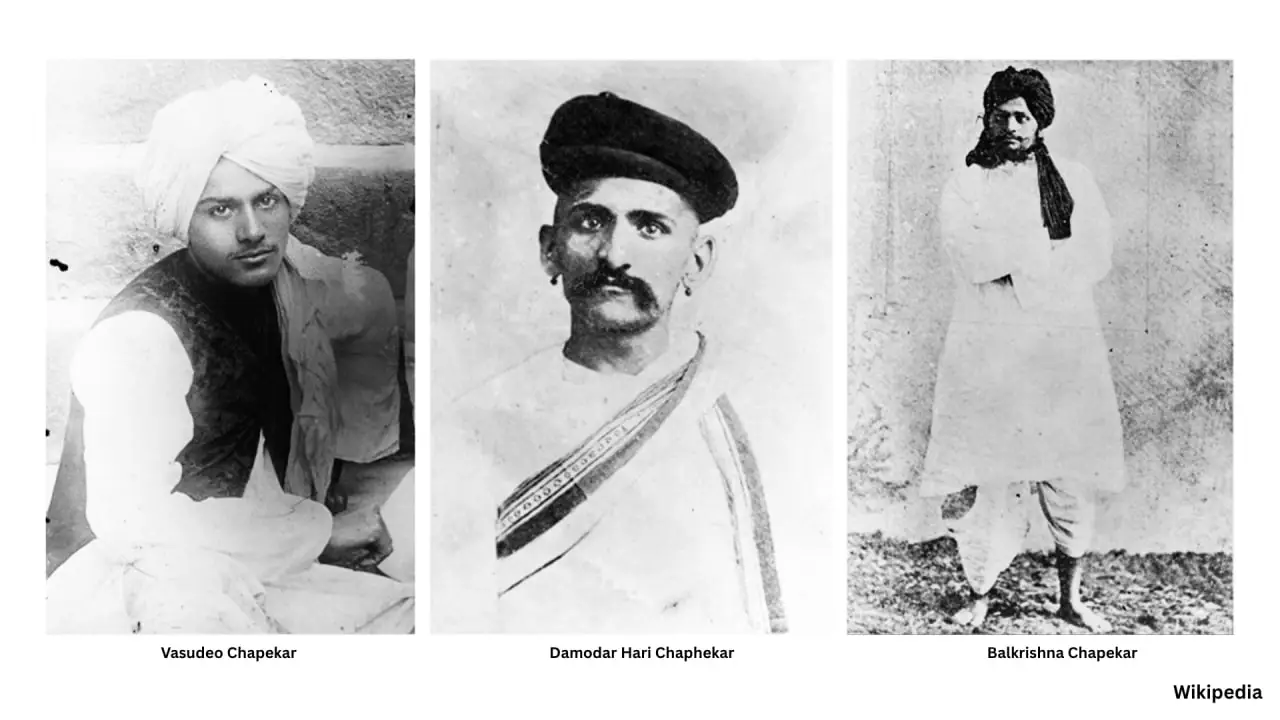
Then 22 June 1897 dawned. On this day, the Chapekar brothers, who had begun their mission on the auspicious day of Gudi Padwa, took advantage of the plague situation and shot Commissioner Rand and Lieutenant Ayerst, who had unleashed severe oppression. Their bodies lay on the streets for all to see.
Photographs and news of this incident were immediately published in newspapers, weeklies, and magazines across India in every language.
This event deeply shook every British officer in India, including the Viceroy, and caused a major shock to the British government in England.
The British government was convinced that Lokmanya Tilak was behind these assassinations, but they could not find any evidence. The Chapekar brothers used to meet Tilak disguised as rural, uneducated farmers. Their associates met Tilak disguised as oil-pressers, betel sellers, carpenters, shepherds, potters, blacksmiths, gardeners, and flower arrangers.
People from all eighteen traditional occupational communities frequently visited Tilak. Because of this, British officers and the moderate faction of the Congress mockingly referred to him as the leader of the working classes. However, Tilak did not consider this an insult; instead, he regarded it as an honor.
Amidst this growing movement, Tilak’s work gained tremendous momentum. At one of the secret hideouts of the Chapekar brothers, the British discovered Tilak’s article on the Bhagavad Gita, in which he had written that killing those who commit oppressive injustice is not a sin.
All the pieces were coming together, but the revolutionaries remained silent, and the Chapekar brothers’ associates destroyed all evidence. As a result, the British government could not sentence Tilak to death.
(The story continues.....)