
Glimpses of the Untold History of the Indian Freedom Struggle - Part 14
मराठी हिंदी ગુજરાતી বাংলা తెలుగు മലയാളം ಕನ್ನಡ தமிழ்
Even as Jhalkaribai breathed her last, she shouted repeatedly before the British army that Rani Lakshmibai — the true sun — was inside the Jhansi fort preparing fiercely for battle. Mundar Begum had personally gathered intelligence and conveyed it to Jhalkaribai that General Hugh Rose firmly believed in five principles:
Killing an entire army without eliminating the king or leader is of little use, because the surviving leader will gather soldiers again.
Indian kings and queens live in luxury and therefore lack the sympathy and support of their people.
Indians are inferior to the British in every respect.
Since the principle of ‘non-violence’ holds a high place in Indian thought, and since Hindus believe that divinity exists in everyone, they would ultimately regard the wealthy and powerful British almost as divine.
A man of any religion, especially an Indian does not lie while dying.
Rani Lakshmibai used this very information to conduct her operations secretly. Jhalkaribai, even in her final moments, deliberately lied that the queen was inside the fort, thus preventing General Hugh Rose from pursuing the real Rani Lakshmibai.
Earlier, for nearly twelve hours, she had successfully convinced the British that she herself was Rani Lakshmibai, thereby diverting the entire focus of the British forces onto her. Meanwhile, the real Rani Lakshmibai, along with her close companions, was able to reach Kaalpi, where Tatya Tope was stationed. Mundar Begum further misled the British by telling Jhalkaribai, in the presence of a traitorous soldier, that the queen had reached Gwalior, thus creating additional confusion.
Half of the British army proceeded toward Gwalior, while the other half remained focused on Jhalkaribai for twelve hours.
As a result, Rani Lakshmibai reached Kaalpi safely. Inside the fort, Diwan Raghunath Singh, Sardar Manjunath Pahadi, Rajkunwarbai, and Kamalkumari used the gained time to prepare more effectively for the next battle. The strategic objective was to ensure that General Hugh Rose’s army would be divided into three parts.
One part would remain engaged with the fort, which needed to hold out for at least three days.
The second part would be drawn toward Gwalior.
The third part would be occupied in blockading the surrounding villages of Jhansi.
Under the leadership of Diwan Raghunath Singh, the Shiv Mahadev Dal operated actively in the villages around Jhansi, constantly moving and attacking to scatter the British forces. This constituted the third division of the British army, and they too were heavily harassed.
Rani Lakshmibai reached Kaalpi safely and held prolonged and detailed discussions with Tatya Tope. Rao Saheb Peshwa and Tatya Tope assured her of their full cooperation.
Men and women from the Durga Dal and Shiv Mahadev Dal reached the queen in Kaalpi through various disguises and routes. Together, their combined forces numbered nearly twenty-two to twenty-five thousand.
Plans were meticulously drawn to launch a fierce attack on General Hugh Rose’s forces. However, there was a significant shortage of modern weaponry.
The queen’s intelligence network was operating vigorously. Based on the information they gathered, Rani Lakshmibai made a bold decision. Her birthplace was Varanasi. (Her maternal ‘Tambe’ family had resided in Varanasi for over a hundred years and maintained close ties with Pune. The Tambes had many well-wishers in Varanasi and nearby regions, and even today many Marathi families have lived in Varanasi for centuries.)
Lakshmibai stayed in Varanasi for some time, secretly assessing how many Indian princes would join the war. However, she gained little support. She personally met nearly thirty-eight rulers over the course of a month, making tireless efforts. Except for assurances from two or three of them, nothing substantial materialized.
Finally, with the support of Tatya Tope’s ten thousand soldiers, she decided to attack Jhansi fort and reclaim it.
Within just seven days of reaching Kaalpi, she had received news that Jhansi fort had been captured by the British. She was determined to reclaim it at any cost.
However, Kamalkumari Chauhan, Rajkunwar Yadav, and her brother Bihari Lal Yadav, who had somehow survived the British assault, met Rani Lakshmibai in Kaalpi on 11 May 1858. She listened with firm composure as they narrated how Diwan Raghunath Singh had fought valiantly and attained martyrdom. She regarded him as a father figure.
An even greater shock followed. They described in detail the devastation of Jhansi fort. Every structure within the fort had been demolished. Numerous houses had been set ablaze, and hundreds of men and women had been brutally massacred. In their view, the queen should abandon the idea of returning to Jhansi. Rao Saheb Peshwa offered the same advice.
But the Queen of Jhansi refused to retreat. She began sending different military units forward along separate routes. On 24 May, she planned to leave Kaalpi at midnight with the remaining one thousand soldiers.
However, traitors had already done their work; before Rani Lakshmibai could even step out of Kaalpi, Major General Hugh Rose launched a fierce assault on Kaalpi with a massive army.
A fierce battle ensued. Ninety percent of Lakshmibai’s forces had already moved out of Kaalpi. Tatya Tope faced a similar situation. Yet both fought with utmost determination.
After three days of intense combat, Rani Lakshmibai and Tatya Tope decided to leave Kaalpi secretly — by different routes.
Her eleven thousand soldiers were waiting for her between Kaalpi and Jhansi. The thought of abandoning them and leaving them helpless was unacceptable to her.
As Rani Lakshmibai began her onward journey with her three companions, traveling along the Ganges, she bore fifty-nine wounds on her body.
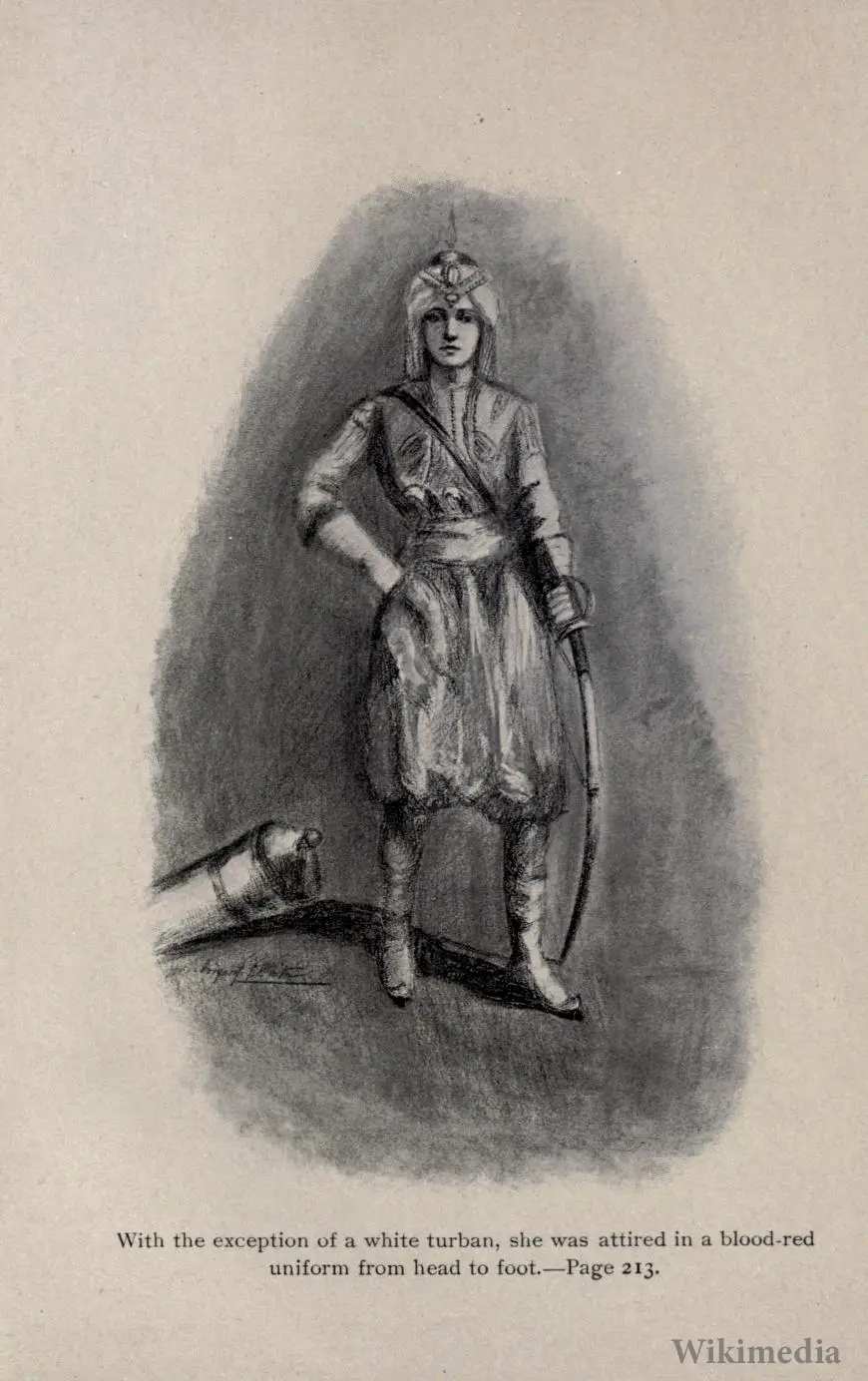
Her key military and political adviser, Motibai, dressed as the queen and set out toward Jhansi through difficult forest routes with five hundred soldiers — deliberately drawing British attention to ensure the real queen’s safe passage. In a letter she later wrote, she mentioned the fifty-nine deep wounds on Lakshmibai’s body.
Midway, Lakshmibai met Motibai, and together they decided to attack and capture Gwalior. Gwalior, too, was under British control, with its ruler independent only in name.
Despite her wounded body, wounded heart, and poorly armed forces, Rani Lakshmibai did not lose her resolve. She devised a new plan.
(The story continues......)