
Glimpses of the Untold History of the Indian Freedom Struggle - Part 15
मराठी हिंदी ગુજરાતી বাংলা తెలుగు മലയാളം ಕನ್ನಡ தமிழ்
At the break of dawn, Tatya Tope, the King of Banpur and a troop of two thousand Indian soldiers who had defected from the British army and fought independently came together along with Rani Laxmibai and launched a ferocious attack on the Gwalior fort and the state of Gwalior.
The local royals of Gwalior had maintained friendly relations with the British and so expectedly, they refused to provide any help to Rani Laxmibai and Tatya Tope. They even conveyed this information to them. But their information was quite sketchy and intentionally so as it was meant for the most part, to mislead.
Handing over the fort to Rani Laxmibai, the royals of Gwalior made their distance from this fight for freedom very evident to the British and in keeping with this stand, they even left
Gwalior to reside in a place far from it. However, they had left behind two of their ‘sardars’ for Rani Laxmibai’s aid and also a considerable cache of ammunition. The state of Gwalior had gifted to Rani Laxmibai, a total of sixteen cannons and a large supply of weaponry.
Until the wee hours of the morning of 14th June, Rani Laxmibai, Tatya Tope, Raosaheb Peshwe and the Maharaja of Banpoor were all engaged in meticulous strategic planning of their troops. General Hugh Rose was just not able to ascertain the size and strength of Rani Laxmibai’s army as over the last month and a half, hundreds of valiant men and women had been streaming in from hundred different paths to join the army of the Rani of Jhansi.
The intelligence reports received by General Hugh Rose revealed that Rani Laxmibai’s own troops numbered an estimated fourteen thousand, Tatya Tope possessed about three thousand. Then there were another two thousand of the Banpur army and probably four thousand soldiers of the independent unit of freedom fighters. But then how many from Rani Laxmibai’s army were militarily trained and how many were valiant Bharatiyas but amateurs who were in the army owing to their patriotic zeal? He was not able to put a figure on this approximation and kept trying out various ways and means to do so.
In any case, Major General Hugh Rose was well aware that it was Rani Laxmibai and her army that were his main enemy and so breaking their spirit and routing them decisively was his primary concern.
Lord Charles Canning, who succeeded Lord Dalhousie as Governor-General, was a shrewd politician and a very close confidante of the British Queen Victoria. He was specially appointed to this post and deployed to Bharat by the Queen.
Immediately on his arrival, he founded three modern academic institutions viz. the Bombay University, the Calcutta University and the Madras University, throwing open to the Bharatiya youth, the royal pathway to enter into British civil service and earn respectable positions. Scholarships too were awarded liberally. Both these gestures served the purpose of luring the urban Bharatiya youth away from the fight for independence.
‘The Hindu Widow Re-marriage Act’, drafted and readied by Lord Dalhousie even before this war had been left on the shelf so to say, for two whole years. First Earl Canning ensured its passage and issued orders to the effect across Bharat.
With the establishment of major universities and the passage of Widow Remarriage Act the social reformers of the middle class placed the British on a pedestal and almost began to deify them, viewing them as the deliverers who had arrived only to salvage the Bharatiya commoner. These reformers then took it upon themselves to dissuade the youth and the women from participating in the fight for freedom. They in fact began relentless work for this purpose, the ramifications of which began to manifest from January 1858.
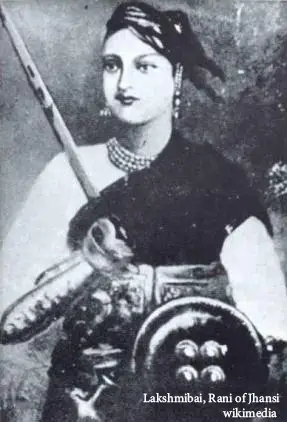
Charles Canning announced a price on Rani Laxmibai’s head. In the strategic regions of Jhansi, Gwalior and Kanpur (Kalpi) boards were put up in every possible place, in crowded places, in markets even outside the ‘Tamasha’ theatres and handouts of advertisements, loud proclamations accompanied by the drum beat ensured the circulation of the word that in return for Rani Laxmibai, dead or alive, the reward was a bounty of Rs. 20,000 in addition to 500 acres of land. There were many who grabbed this bait. These spineless, subservient and greedy persons began passing on news of Rani Laxmibai’s movements and went to the extent of helping the British in various tasks.
On the morning of June 14th 1858, guided by a tip from one such traitor, the army of Major General Hugh Rose unleashed a fierce attack on Gwalior. It was a massive army of thirty thousand soldiers.
The attack was launched from six different directions. Five thousand troops, 150 cannons and 550 very advanced rifles were positioned at every point of initiation.
Also in front of these six battalions was a human chain of 10,000 traitors – originally sons of the Bharatiya soil.
Rani Laxmibai too retaliating on the same lines, created units of her army to counter the British forces. All had willingly accepted her leadership.
A ferocious battle erupted on all the six fronts. First the British cannons and rifles spewed torrents of fire and then the foot soldiers moved forward to continue the battle. That was their tactical strategy.
Moving continuously across all the six locations, Rani Laxmibai kept motivating and encouraging all the troops, changing their positioning while she herself fought with fierce zeal and grit.
Rani Laxmibai alone killed 300 British soldiers apart from 170 British army officers over merely two days and despite the fact that the 59 wounds on her body had not healed yet.
On the morning of June 16th at around 9, ‘Sadhu Bhagwandas’, her very trusted spy came to see the Rani. For the last two years, Bhagwandas had been working behind the scenes for her. It was Diwan Raghunath Singh, who had introduced him to Rani Laxmibai and ‘Shree Moropant Tambe’ himself had vouched for Sadhu Bhagwandas, who was in actual fact, ‘Chintamani Raste’ and his close and trusted friend.
Sadhu Bhagwandas briefed the Rani in detail about the strength of the infantry and that of the artillery. Bhagwandas always wandered among the British troops to perform the pooja and other worship rituals of the Hindus among them which never gave the British any reason to suspect his intentions. Rani Laxmibai however could just not shake the thought off her mind that the face of Bhagwandas, hidden behind the matted tresses, the moustache and the beard, the ash smeared on it, had eyes that were not at all those of a stranger. She felt she knew them, they seemed very familiar.
So it was today. Having provided all the intelligence, Sadhu Bhagwandas bowed to the Rani and turned to leave by the secret passage. As he turned, she felt a sharp pang of pain noticing the blood stains on the back and the drops of blood trickling down through his saffron robe. Just as she rushed forward, he collapsed….
The wig of matted tresses fell off and so did the false beard and the moustache.
Her own father Moropant Tambe lay there before her eyes, drawing his last breaths. She surged forward to place her father’s head on her lap and at that very moment, Moropant had passed over. A stab of grief made her slump, but for a moment. “How could I not have known these eyes!”
The very next moment, she pressed her head to her father’s feet and rose to mount her horse, Badal – the horse her father had gifted her.
She began a fierce battle. She fought tooth and nail. She had not had even a moment of sleep.
On the 18th of June, at the break of dawn the British cannons began raining fire from all the directions around Rani Laxmibai.
On one side were Rani Laxmibai, Mundar Begum, Rajkunwar Yadav, Manjunath Pahadi and Ramchandrarao, the Rani’s nephew who loved her very much and apart from them, 250 soldiers.
Surrounding them on all four sides were 150 British officers, 250 cannons and 10,000 British soldiers.
There was not a single spot on Rani Laxmibai’s body which was not bleeding. But she kept fighting.
Her horse Badal was shot in all the four legs bringing the Rani crashing to the ground.
As she came down, she handed over to Rajkunwar Yadav, her adopted son ‘Damodarrao’ whom she had strapped to her back. She then indicated to Rajkunwar, a path that would take them to safety.
Rani Laxmibai had collapsed to the ground but holding on to her sword, she fought on and leaped on to another horse.
As she fought with two swords, one in each hand, a British soldier stabbed her in the back with his sword.
As she drew her last breaths, she cried out to RajKunwar and Ramchandrarao summoning all the strength she had left, “May no Britisher touch my body after I am gone!”
She had verses of the Geeta on her lips.
Her gaze panned towards Jhansi. But before her eyes, she saw Bhagwan Shreekrishna. She kept looking at Him; the sight filling her heart. “O Vasudev! To You alone I surrender”, she said to Him.
In the next five minutes Ramchnadrarao, Rajkunwar and Motibai carried her body to the forest and performed the last rites.
Death can never really come to Rani Laxmibai.
Even today she lives in the heart of Bharatmata, she certainly does
And she will do so, forever and ever.
….to be continued