
Bapu's home abounds with spirituality (Atul Mahajan)
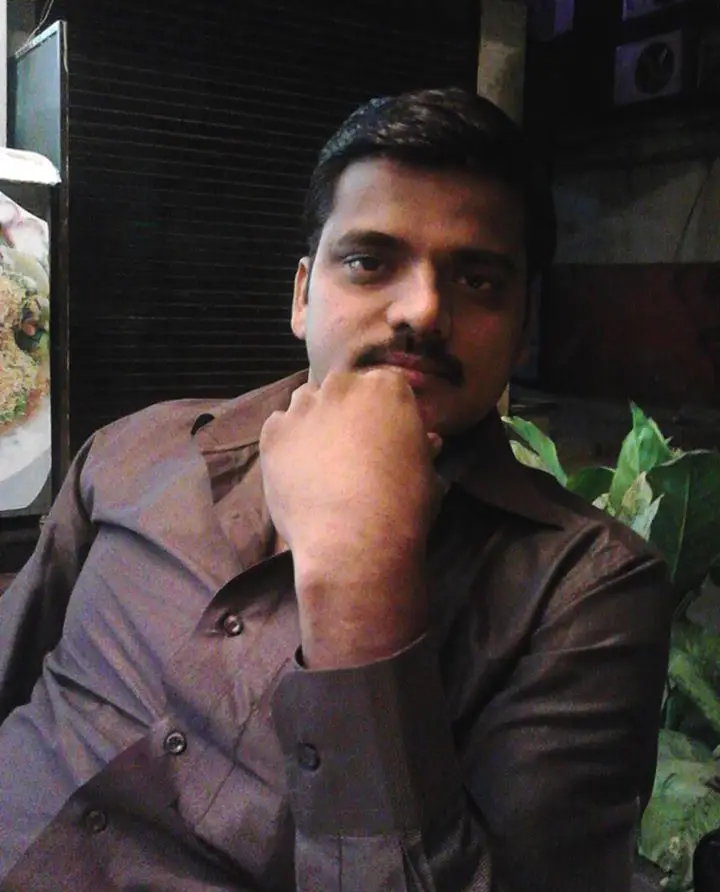
- Atul Mahajan
Since the year 2003, I have been the 'purohit' at all the events at Bapu's house. Pathak Guruji and I have been blessed with the opportunity to perform the Dattayaag since December that year. We had got to know all about Bapu at a function at Juinagar. Pathak Guruji and I took the darshan of the Dharma Chakra that Bapu installed there. At the time, we did not really have great faith as such in Bapu. However, we could sense the spiritual atmosphere. We could sense that of all the places at which I was the 'purohit', there was something special, something different about this one. With a wish to make a compilation of the articles that had appeared in the 'Sai Satsanga Ratna' Pathak Guruji and I then went to see Suchitdada at the Navneet clinic. We sat waiting for our turn. It was about evening time. All of a sudden people moved to a side and we heard whispers that Bapu had arrived. We had no idea at all...except for the meagre basic fact that Bapu, a doctor, gives discourses and is always dressed in shirt and trousers. That was just about it. We stood to one side outside Navneet. Bapu waved to people as He entered the clinic. On the first step to the clinic, Bapu turned around. That was the very moment, His glance fell on the two of us. Inside of us, we felt the special something, the strange specialty of the look. We knew what spirituality was all about, we knew what to do inside a temple and what not to do, we knew mantras and so were hardly interested in knowing the sentiment that lay behind them. We had come into contact with quite a few maharaj and sages and had been part of so many festivals and other sacred events. But then that one look, that one glance from Bapu changed so much, it changed everything.
That day on, we met with Suchitdada a number of times. As for the personal meeting with Bapu, there was still time. That came much later. Around 2001, we published the Gurupournima issue on Bapu.
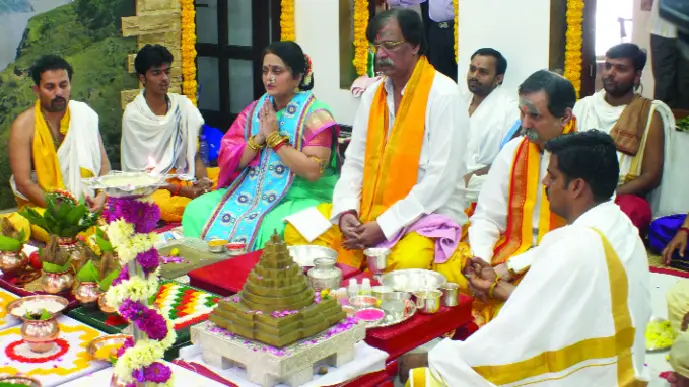
We had gone to Bapu's cabin to give Him this issue. Taking it, He glanced through it very lovingly and said, "Keep doing this...that is what the need is now." We had been running the 'Sai Satsanga Ratna' for a year and a half now. To run a spiritual magazine implied care on so many fronts and was a tough task. But Bapu boosted our morale and we even got permission from the organization to print the Panchasheel question papers, the blessed moments of shraddhavaan. One of the issues contained information about organizing a yadnya. Bapu and Suchitdada happened to read this article and Suchitdada asked us if we did the 'paurohitya' (purohit=priest presiding over a sacred event like the yadnya). We both nodded. We then were asked to be purohits at the Datta yaag to be done at Bapu's house on 16th December 2003. Paurassinh was to perform the Yaag. I was quite nervous, restless in fact. All poojan we had performed till date had obviously involved certain procedures, rites, principles and at times even unnecessarily ritualistic or pretentious. Would all that do at Bapu's place? We had heard that Bapu's approach was totally scientific. Would the 'pooja' that we knew of be allowed? We were still thinking about this as we set about the Datta Yaag. It is an accepted norm that the person performing the yaag has to obey in toto, all the instructions that the acharya (we, the purohit) gives. The one to perform the yaag or the 'host' as he is called, had already been told about this. Bapu and His family gathered around the yadnya as we began. They were observing the way the poojan was being offered. Questions were put but only out of curiosity. Questions like 'what are the steps involved in a yadnya' came out of genuine interest and concern. All that we required for the poojan was ready and in place – right from the platters to the flowers. We felt relaxed. Aai listened carefully to all recitations and asked questions from time to time. Aai then did the 'aukshan' and the 'punya vachan'. We even performed the special 'havan' of the Dattamala mantra, the special 'adhishthan' that Bapu had asked us to include in the afternoon session. We actually and truly received the energy that one is supposed to receive as a result of such a yadnya.
The experience of being a purohit at the yadnya at Bapu's place was already proving to be a learning experience. At other places usually it is only the 'host' who sits with us doing the rites. There is noise and commotion around. But at Bapu's place it was quite the opposite. The whole family was involved and present. The energy we felt was remarkable. The atmosphere, the arrangements and the energy released surprised the other invitee purohit who attended the yaag. Each one present was immersed in the 'naamasmaran' of the bhagavanta. In the afternoon on the second day of the very first yaag, we were blessed with the 'Sadguru charansparsh' – we were blessed and overwhelmed that we could bow at the Sadguru's feet, actually touching our heads to the sacred Feet. Aai-Bapu-Dada were blessing us with this moment. The yaag on the seventh floor of a building in Mumbai gave to us the divine experience of performing one in the sanctity of an ancient ashram of the forests. The feeling we got was thus: the purohits in this ashram were being received and taken care of by great and pure sages!
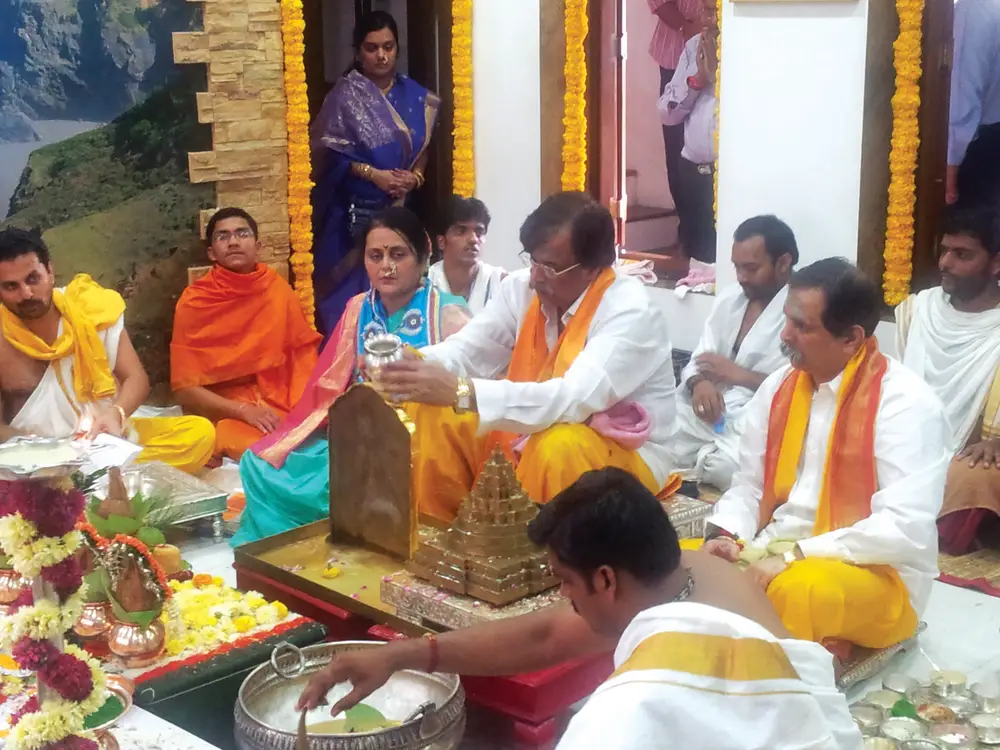
Bapu has occasionally guided us during several yadnya that we performed, even suggested changes. It was He who explained to us the purpose and sentiment of certain poojan that we had been doing. He explained also, what exactly the concept of 64 yogis meant, what the principle 'peeth' (the basis that receives and assumes) is, what the 'yadnya-purush' means and many such notions. And so despite having performed yadnya spread over days, despite having performed the purohit's duties and despite having adorned the role of the 'acharya', it was only after the yadnya at Bapu's place that we understood the 'yadnya-purush' in the true sense as also the meaning of the notion that the material offered in the yadnya and the entire system the yadnya constitutes per se along with the recited mantras and their purpose and sentiment are 'received' in the yadnya. We understood it and we experienced it.
The entire family participated in the 'stuti' (hymns in praise of the bhagavanta) and in the instruments played as part of the procedure, the blowing of the conch, etc. What was remarkable was that all of this was done with joy and earnestness. Nandai Herself offered the saree during the Devi poojan. Nandai was then in the role of a loving bhakta and we saw the love and bhakti with which She offered the poojan to Mothi Aai. At most places, we usually had seen a sort of hurry to finish off once and for all or be done with the poojan. Here, things were exactly the opposite – each one relished every moment of the poojan. It is now nine years since then – Pathak Guruji and I have been performing two Datta yaag every year at Bapu's place.
As part of the Avadhoot Chintan Festival, Bapu blessed us with the opportunity to perform the three day datta yaag. Bapu Himself and in His own home, made the Gayatri Yantra 'siddha'. For this purpose, He had specifically instructed us about what kind of purohit team we would need, their age groups, their conduct, what they ought to be eating etc. He called a meeting to discuss what the 'yantra' ought to be made of – pancha-dhatu (5 metals), gold, copper etc. The gayatri yantra was then made siddha. Waters from various sacred places had been brought and the priests belonging to these places were invited as well. The yantra was made siddha and then handed over to Bapu.
The three dimensional yantra too was readied in due course. It is a solid Shree-yantra weighing a good 65 kg. This was preceded by atleast about 16 or 17 meetings with Bapu. Every minute detail was meticulously discussed and worked out to make it a perfect Shree-yantra. Bapu got it done from us. But He had, all the same, first given us the freedom – to think, to make the effort, to search for what could possible be required, etc. It was only after the Shree-yantra was ready that He told us that one such yantra could be found at the Dwarka ashram, one of the four established by Aadya-acharya Guru Shankaracharya. We happened to visit Dwarka after Bapu told us this. We got to see the Shree-yantra there. It was exactly the same! There was not an iota of difference. Bapu had 'not seen' the yantra but had got it done and even had it rendered siddha from 16 priests.

Bapu blessed us with the opportunity to be part of the Maandaar Ganesh poojan and installation. Bapu assigned to Pathak Guruji and me, the entire responsibility of the installation of the Ganpati idol to be installed in the Shreegurukshetram. We had only heard about the Mandar Ganesh. The Mandar Ganesh is found in the roots of the 'Ruee' tree that is 21 years old. The Ganpati so found, is swayamsiddha (inherently equipped with to be siddha). We had no idea how this idol was to be separated and lifted out from the tree. there was then a detailed discussion with Bapu. The idol was lifted out from the earth after the moon rose in the sky, on the Sankashta Chaturthi in the month of Paush of the year 2012. 11 months of different kinds of 'anushthan' followed. It was kept in sandalwood, in ashtagandha, in oil and in ghee. As purohits, Bapu always consulted us about the mantras to be recited while rendering the idol siddha. Bapu is so open-minded that he asks questions about what He wants to know and is open about the fact that He wants to know the answer.
On the day of the Ramnavmi, we are all blessed with the darshan of Mothi Aai. Renuka mata has been part of our Mahajan family for at least some 3-4 generations. Bapu saw the picture and explained a few things. The upper part of the face ought to be covered, He said elaborating on the impacts. He even told us about the impacts that a face that was not covered would have. Bapu got the very same idol for Ramnavmi and rendered it siddha. the 'Sahasraadhaar Abhishek' would include 27 types of Dhara-paatra. That was the ultimate stroke, I thought! Apart from us now, only the Mahakaleshvar Mandir at Ujjain has it. Since the last 2 years, the abhishek is being offered to the Mother Renuka. Nandai had sent a special message concerning the abhishek. She is a Mother, She is our dear Mother and She has travelled far and long to be with us. She must be received well, received warm affection from the heart. The idol is with us for three days and then at Bapu's house. The Mother is carried to our village from the Bapu's 'Devghar'. Bapu Himself told us that this idol has been with the Mahajan family (my family) for 15 generations. I am the 16th. An interesting point is the idol came to me in chronological sequence.

The Mahadurgeshvar installation was memorable too. The Mahadurgeshvar Linga is extremely pure and sacred and is the foremost Jyotirlinga of the Kaliyug. This is the Stree-ambikeshvar and its poojan has to be offered in an appropriate way. Bapu often talks about the purity of purpose and of the means as also of the fulfilment of the purpose to accomplish a task. The Jyotirlinga, before it is installed ought to be with a purohit for at least a month, was Bapu's wish and so it came to our home. We were of course instructed about how the poojan was to be offered. At 3.30 in the morning on the day of the installation, the linga was brought to Bapu's house from ours. Sameerdada, Paurassinh and Swapnilsinh had to offer the Dandavat 7 times from the main gates of the Gurukshetram to the place of installation after which they could take darshan. It was not just offering the haldi kumkum. A proper procedure was followed. The parikrama (going round the sacred idol) was offered around Happy Home. Drums and other instruments were played.
The Jyotirlinga was instyalled. Paurassinh and Nishthaveera did the Navachandi Yaag Anushthan. Bapu was consulted on all topics and meetings were conducted. Aai said, the motive was to list out all requirements, assign jobs, delegate work to people so that the preparations are accomplished before hand and nothing remains to be done at the last moment. This diverts the attention and we do not want it. We want everyone to have work behind them and relish every moment of the poojan.
Aai Herself sat with sacred work while the Saptashati Paath was being performed. Bapu too sat during the havan. Each person observed the poojan keenly. What is the panchopachar or the shodashopchar poojan? The fire that is created during the poojan procedure is called 'Airani'. Any poojan stretching over 3-4 days includes the Airani Manthan. Aai was always present and explained to the others, which kind of wood would be held on top and which one below it to be rubbed against each other causing friction and eventually fire.
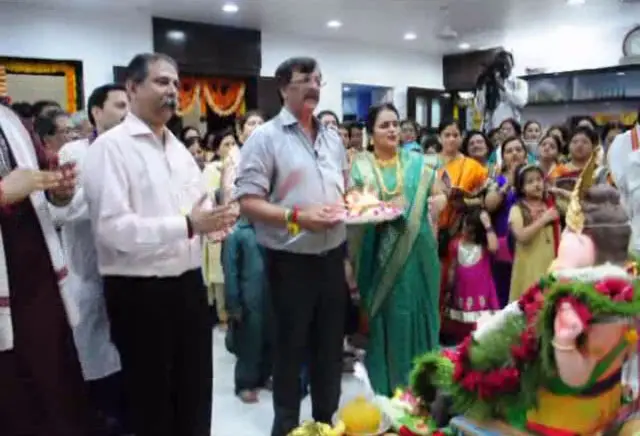
We as presiding priests often find that the host and their families are barely concerned about the poojan and the yadnya. They do it because they have been compelled to do so or it has been advised considering the horoscope. At Bapu's, it is all different. they try to understand the science behind it all. Care is taken to ensure that the poojan or the rites are performe in the best possible way. The Dattayaag performed until then included 1000 recitations of the Purusha sukta. Bapu showed us the Dattamala mantra way and how it was a unique mantra. He even rendered it siddha, getting all the purohit to recite it. Bapu-Aai-Dada and all the family members are present at the anushthan when the mantra is recited. The purohit performs the yadnya but the minds of all present connect with it. they ensure that no mobile rings during this time. None of them is seen wandering outside. they are all present and they are all connected with a pure sentiment. Bapu even explains the anushthan to all present.
Similarly Bapu got done from us, the Chandika Anushthan. The purohits, their attire, their food, rules to be followed etc. is carefully observed. Onions and garlic were to be avoided. the Yadnya at the time of the festival, what was to be kept where, everything was decided and Bapu personally ensured that it happened in the appropriate way. Bapu's knowledge in the field is vast, just immense. There is nothing that He does not know!
The purohit repeatedly do the anushthan of a mantra and through five years and so know only the forty chapters of a ved. bapu knows all the mantras of all the vedas!! Bapu even recites the mantras along with the purohits. If any of them goes wrong in the pronunciation, the tone or the pitch, the beat etc. Bapu takes him aside and corrects him. Bapu is meticulous about detail. The attire or the colour to be worn is also what He instructs about. In certain kinds of Ganpati poojan red has to be worn and the Datta Yaag requires yellow. Bapu explains the scientific reason behind these requisites and so all the purohits who leave Bapu's home after a yaag wait eagerly for the next one. It is not only a learning experience, it is satisfying and fulfilling.
We have been purohits for the last 10-12 years but there are others who come from out of town too. Some from Nasik, some from Pune and others even from Kashi. They do not know much about Bapu. But the joy that fills the air after the yadnya reflects on their faces. The Vedic purohits admit that they have never experienced this kind of energy and joy any where else. They experience also of course the moment of touching their heads to Bapu's Lotus Feet and thereby a peace that they would never experience anywhere else either.
The fruit to be attained after the yadnya at Bapu's place is several times greater than that to be attained from any other yadnya anywhere else.
Bapu got done at Shree Gurukshetram, the Nava Chandi Yadnya that He gets done at His home. The prayers offered as part of the yadnya done under Bapu's instructions or at Bapu's home is not restricted to the personal level. It rises above it and is meant for the nation. Bapu says, the resolve that a purohit makes at a yadnya must include a prayer for the protection of the nations borders and the purusharthas of the dharma, artha, kama and moksha.
When we preside over a yadnya at other places, we share the knowledge that Bapu has given us, we share the scientific basis and the purpose behind mantras.
Bapu is the basis, the essence, the seed. We receive it and share. We reach out to others. We pray that the tree grows and by Bapu's grace it is growing.
||Hari Om|| ||Shri Ram|| ||Ambadnya||